


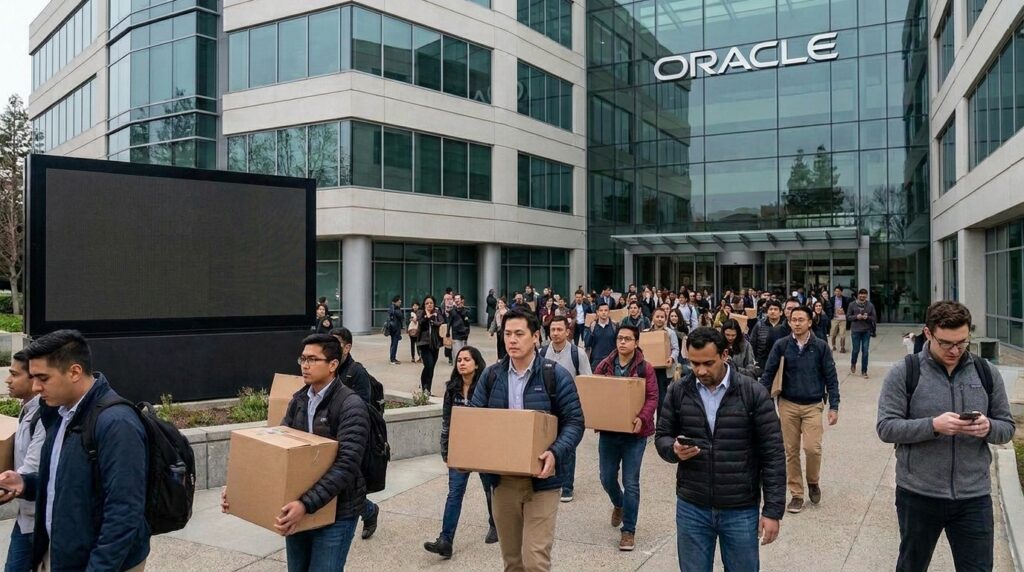
Oracle just spent $1.8 billion saying goodbye to thousands of its own workers. The global tech giant shed approximately 21,000 roles globally in the past year as the company restructures its operations around artificial intelligence.
Oracle disclosed the cuts in its latest annual report. The numbers paint a clear picture of just how fast AI is reshaping one of the world’s biggest software companies.
Oracle’s full-time headcount fell from around 162,000 to 141,000 employees as of May 31, 2026. That drop works out to roughly 13 percent of Oracle’s total workforce.
The layoffs came at a cost of $1.8 billion in severance payments and restructuring charges over the past year. That figure is nearly five times the $374 million Oracle paid in restructuring costs the previous financial year.
These are not small numbers for a company resizing its workforce. They show just how seriously Oracle is treating this shift toward AI-driven operations.
Don't MIss This Article


Why Oracle Says This Is Happening
Oracle did not hide the reason behind the cuts. The company acknowledged in its report that the downsizing was influenced by the deployment of AI technologies across its operations, and warned that more layoffs may happen in the future.
Oracle stated plainly that the adoption and deployment of AI technologies across its operations have resulted in, and may continue to result in, reductions to its workforce. The company added that this kind of restructuring has led to, and may in the future lead to, increased restructuring costs and reduced productivity.
Don't MIss This Article

Oracle also admitted the process has not been smooth. The company said its restructuring efforts can be disruptive, and warned that the reorganisation may cause a shortage of skilled workers in certain roles, which could lead to lost productivity that affects its earnings.
The Cuts Were Quiet Before They Were Confirmed
Interestingly, Oracle did not make a big public announcement about these layoffs as they happened. The full scale of the cuts was not publicly confirmed until the annual report was filed, even though senior employees had been posting online about significant job losses as far back as April.
This means many of the cuts were happening quietly behind the scenes for months before Oracle’s official numbers confirmed just how deep they went.
Oracle’s job cuts are part of a much bigger pattern playing out across the global tech industry right now. Companies are cutting staff while spending hundreds of billions of dollars building AI infrastructure, including data centres and computing capacity.
Amazon and Meta have also cut thousands of jobs in recent months as both companies pour money into AI investment. According to estimates from employment tracking firms reported by the BBC, more than 100,000 technology workers have been laid off in the past year, with AI-driven restructuring becoming a steady pattern across the sector’s biggest employers.
Don't MIss This Article

Meta in particular has followed a similar path recently. Earlier this year, the company began informing employees worldwide about a fresh round of layoffs affecting roughly 8,000 positions, as part of its plan to streamline operations while investing heavily in AI infrastructure, research, and product development.
What This Pattern Means Going Forward
What is happening at Oracle is not an isolated event. It reflects a broader shift where some of the world’s biggest tech companies are choosing to spend massive amounts of money building AI systems while cutting the size of their human workforce at the same time.
For workers in tech, especially in roles that AI tools can now handle more cheaply, this trend raises real questions about job security going forward. Companies appear willing to pay billions in severance costs now if it means a leaner, AI-powered workforce later.
Oracle’s $1.8 billion payout shows just how expensive this transition has been, even for one of the world’s largest software companies. Whether this bet on AI pays off in the long run is still unfolding, but for the 21,000 people who lost their jobs this year, the cost has already been very real.