


Women in Nigeria who work online, journalists, influencers, activists, and entrepreneurs, are facing a growing wave of cyberbullying and gender-based digital abuse. Now, the National Information Technology Development Agency, known as NITDA, says it is building a new framework to fight back.
NITDA’s Director of Corporate Communications and Media Relations, Hadiza Umar, disclosed this in an interview with the News Agency of Nigeria on Monday. The agency says it is stepping up measures to tackle cyberbullying, gender-based online harassment, and other harmful digital behaviours, and is developing a framework to do exactly that.
Why This Is Becoming a Bigger Problem
Umar noted that cyberbullying and gender-based digital abuse have become growing challenges for women in public-facing roles, including journalists, influencers, activists, and entrepreneurs. These are women whose work depends on having a visible online presence, which unfortunately also makes them easier targets for harassment.
The agency is advancing this initiative through its Strategic Roadmap and Action Plan, known as SRAP 2.0, which places digital trust, cybersecurity, inclusion, and online safety at the centre of its policy goals.
Don't MIss This Article

Umar said NITDA is developing a proposed Online Harm Protection Framework and White Paper, working alongside stakeholders across government, civil society, and the wider technology industry.
She explained that the framework specifically targets harmful online behaviour such as cyberbullying, hate speech, misinformation, online harassment, and gender-based violence, while still protecting digital rights and freedom of expression.
NITDA has already introduced a Code of Practice for Interactive Computer Service Platforms and is continuing talks on a proposed Online Harm Protection Bill. The agency is also working directly with social media platforms and technology companies to speed up and strengthen content moderation.
Don't MIss This Article

One issue Umar raised stands out. She flagged a concern from stakeholders that harmful content written in Nigerian languages, including Hausa and other indigenous languages, often slips past the automated moderation systems used by global tech platforms.
This means harmful posts written in local languages can stay online longer simply because the platforms’ filters were not built to understand them. In response, Umar said NITDA is pushing for more localised moderation systems that can actually understand Nigerian languages, contexts, and online behaviour.
She added that the agency is promoting a multi-stakeholder approach involving regulators, technology companies, researchers, civil society groups, and digital rights advocates to improve reporting tools, transparency, and response times for victims of online abuse.
Training and Tools for Women Online
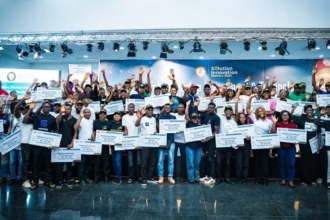
Beyond policy, NITDA is also investing directly in skills and awareness for women. Umar said programmes like the IGNITE Her Bootcamp and the National Gender Digital Inclusion Strategy are helping equip women with digital skills, cybersecurity awareness, and the tools they need to participate online more safely.
She also shared practical advice for women dealing with harassment right now. Her recommendations include tightening privacy settings, avoiding sharing real-time locations, keeping personal and professional profiles separate, and using built-in platform tools like blocking, muting, and keyword filters.
Don't MIss This Article

Umar urged victims of online harassment to document abusive content through screenshots and saved links instead of engaging directly with the people attacking them, since direct engagement can often make things worse.
She summed up the agency’s approach with a simple message. Protecting yourself online is not about limiting your voice, she said, but about building a digital fortress around your personal life so you can participate online safely and with confidence.
This Builds on Earlier Work
This is not NITDA’s first move to support women in Nigeria’s digital space. In March 2025, the agency revealed it was taking steps to close the funding gap faced by female startup founders in the country through its National Gender Digital Inclusion Strategy.
The agency had also showcased this work during the 69th Session of the United Nations Commission on the Status of Women, where it highlighted efforts to narrow the gender digital divide and create more opportunities for women in Nigeria’s digital economy.
Building a framework on paper is one thing. Making it work for the women facing harassment every day online is another challenge entirely. For now, NITDA has laid out its intentions clearly, but how fast this framework moves from planning to real protection is something Nigerian women online will be watching closely.