

Starting a blog in Nigeria has never been more accessible than it is right now. You do not need to code, you do not need a huge budget, and you certainly do not need to be a “tech person.” What you need is a clear roadmap, and that is exactly what this guide gives you.
If you want to write about tech, relationships, food, finance, entertainment, or your local community, the steps below will take you from “I have an idea” to “my blog is live” in a single afternoon. Along the way, you will also learn which platforms and hosting providers actually make sense for Nigerian bloggers in 2026, based on real pricing, real infrastructure, and real trade-offs.
Why Start a Blog in Nigeria in 2026?
Blogging is still one of the most realistic ways to build an online income in Nigeria. AdSense, affiliate marketing, sponsored posts, and digital products all still work, and Nigerian creators are increasingly building blogs alongside YouTube channels and social media pages rather than relying on social platforms alone. A blog gives you something social media cannot give you, which is a piece of the internet you actually own, that Google can rank, and that keeps working for you long after a post is published.
The barrier to entry has also dropped. A few years ago, launching a professional-looking blog in Nigeria required either technical skill or a developer’s budget. But today, a beginner can go from zero to a fully functional WordPress blog for well under ₦20,000 in the first year, sometimes less, depending on the platform and promotions running at the time.
Step 1: Pick a Niche You Can Write About for Years
Before touching any platform or hosting plan, decide what your blog will actually cover. The mistake most new Nigerian bloggers make is choosing a topic because it looks profitable, then losing steam three months in because they have nothing left to say.
Don't Miss This Article

A good niche sits at the intersection of three things, which are; what you know, what you enjoy, and what people are actually searching for. Personal finance, tech reviews, relationship advice, education and school guides, Nigerian entertainment, and local city guides all these niches continue to perform well because they solve real problems people search for daily. If you are unsure of what niche to go into, look at what questions people around you keep asking, that is usually your niche hiding in plain sight.
Step 2: Choose the Right Blogging Platform

This is where most beginners get stuck, so let’s break it down honestly.
WordPress.org (self-hosted) is the platform behind the majority of professional blogs worldwide, and for good reason. It is free to use, endlessly customizable, and gives you full ownership of your content. The catch is that self-hosted WordPress needs, well, hosting, which is a separate purchase. This is genuinely the best option if you plan to monetize seriously, because you control everything from ad placement to site speed to SEO structure.
Don't Miss This Article

Blogger (Blogger.com) is Google’s free platform. It costs nothing and is simple to set up, but it looks less professional, offers limited design flexibility, and Google has quietly deprioritized it over the years. It can work for a hobby blog, but most Nigerian bloggers who start here eventually migrate to WordPress once they get serious.
WordPress.com sits in between. It is more polished than Blogger but still comes with restrictions unless you pay for higher-tier plans, at which point you are often paying more than you would for self-hosted WordPress with better results.
Medium and Substack are worth mentioning too, especially if you want to write without worrying about design or hosting at all. The trade-off is that you do not fully own your audience or your monetization, since you are building on someone else’s platform.
For anyone serious about building a long-term blog in Nigeria, self-hosted WordPress remains the clear winner. It just means you need two more things, which is, a domain name and a hosting plan.
Step 3: Register Your Domain Name
Your domain is your blog’s address on the internet, for example, yourblogname.com. Keep it short, easy to spell, and easy to say out loud, since a lot of your traffic will come from word of mouth and social media mentions.
You have two main routes for Nigerian bloggers which is a .com domain, which looks universal and trustworthy anywhere in the world, or a .com.ng domain, which signals that your blog is local and Nigerian. Both work fine for AdSense and affiliate monetization. Domain prices for .com typically run from around ₦18,000 to ₦25,000 for the first year depending on the registrar, while .com.ng options are usually cheaper, often starting from around ₦7,000 to ₦14,500.
Don't Miss This Article
Most hosting providers will also let you register or bundle a domain directly with your hosting plan, sometimes for free in the first year, which brings us to the most important decision of this whole process.
Step 4: Choose a Hosting Provider
Hosting is where your blog’s files actually live. It is also where beginners either save themselves a lot of stress or set themselves up for slow load times, downtime, and frustration down the line. Since you’re building for a Nigerian audience but might also want global flexibility, it’s worth understanding your main options rather than just picking whatever is cheapest.
If you want a Nigerian-based host with local support and Naira billing, Qservers and Whogohost are two of the most established names in the market.
Qservers has been around since 2004 and is one of the longest-running independent hosts in Nigeria, with beginner shared hosting plans starting from around ₦1,850 a month. It runs on cPanel, which makes WordPress installation straightforward through the built-in Softaculous installer, and it backs its shared hosting with a 99.99% uptime guarantee. One thing worth knowing upfront is that Qservers’ shared hosting infrastructure currently runs from data centres outside Nigeria, which can add some latency for local visitors compared to a host running fully on Nigerian servers. For most blogs, this difference is barely noticeable, but it is worth knowing if raw local speed is your top priority. Where Qservers genuinely stands out is support, they’ve picked up multiple Nigeria Technology Awards and aim for a 15-minute live chat response time, which is reassuring when you’re troubleshooting your first WordPress site at midnight.
Whogohost is Nigeria’s largest hosting provider and has been operating since 2007. Everything is billed in Naira, so there’s no worrying about exchange rates or failed international card payments, a real advantage for beginners who just want to pay and get started without complications. Its shared hosting plans include a free domain, free SSL, and free site migration if you ever decide to move your blog later. Whogohost also runs a dedicated WordPress hosting option built on AWS infrastructure with a 99.99% uptime guarantee, which is worth considering once your blog starts getting steady traffic. The company regularly runs discount promotions on shared hosting, so it’s worth checking their current pricing before you commit, since promotional rates can bring the entry cost down significantly compared to standard pricing.
If you’d rather host internationally, Hostinger is one of the most popular budget options worldwide and has built a strong reputation among bloggers for its low entry pricing and beginner-friendly dashboard. Shared hosting plans start at a few dollars a month on longer commitment terms, and every plan includes a free domain for the first year, unmetered bandwidth, and access to an AI-assisted website builder if you want extra help getting started. The main things to plan around are that pricing is in US Dollars, which means you’ll need an internationally enabled card or an alternative payment method, and that renewal pricing after your first term is noticeably higher than the introductory rate, so it pays to read the fine print before you commit long-term.
So which one should you actually pick? If local support, Naira payments, and zero currency stress matter most to you, Qservers or Whogohost will feel more comfortable day to day. If you want the lowest possible entry price and don’t mind paying internationally, Hostinger is hard to beat on pure affordability. There is no wrong answer here, it genuinely comes down to what you value more either local convenience or international pricing.
Step 5: Install WordPress and Set Up Your Blog
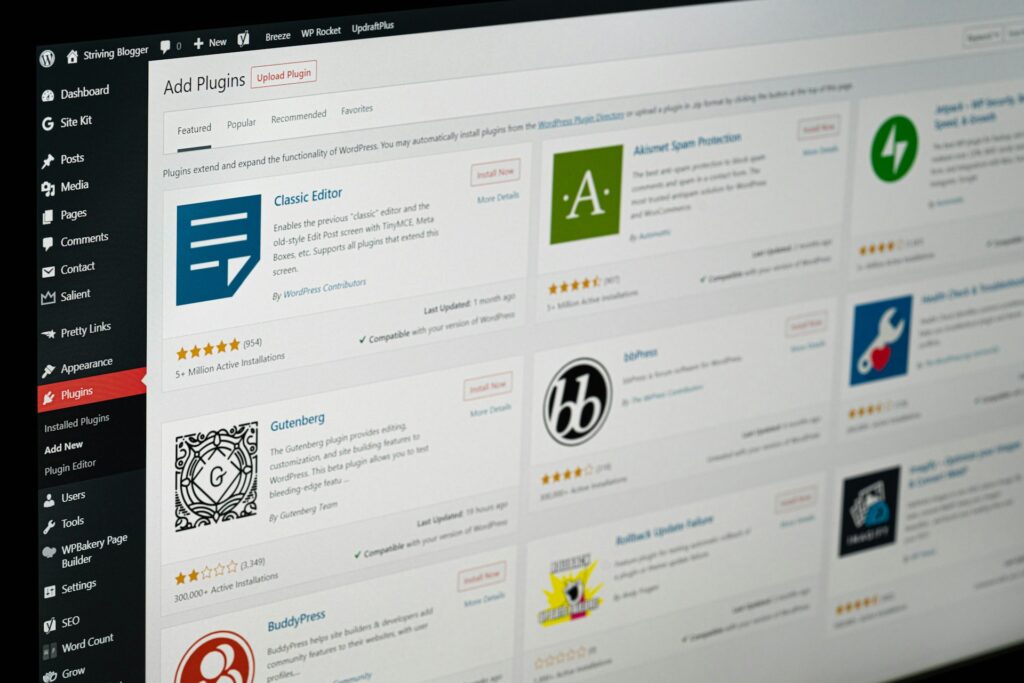
Once your domain and hosting are active, installing WordPress is usually a one-click process through your hosting dashboard, whether that’s cPanel’s Softaculous installer or a platform’s own setup wizard. After installation, log in to your WordPress dashboard, choose a clean, fast-loading theme (Astra, GeneratePress, and Kadence are reliable free options), and delete the default “Hello World” post and sample page that come pre-installed.
From there, set up your essential pages: an About page, a Contact page, and a Privacy Policy, which you will need before applying for AdSense or most affiliate programs. Install a security plugin, an SEO plugin like Rank Math or Yoast, and a caching plugin to keep your site fast, since page speed directly affects both your Google rankings and how long visitors stick around.
Step 6: Start Publishing Content That Actually Ranks
Your first ten articles matter more than people admit. Focus on topics with clear search intent, meaning people are actively typing that question into Google, and answer it thoroughly. Use proper headings, write in simple, clear language, and avoid stuffing keywords unnaturally. Google’s algorithm in 2026 rewards content that genuinely helps the reader, not content built purely to rank.
Consistency beats perfection here. A blog with two solid articles a week for six months will outperform one with ten articles in month one and silence afterward.
Step 7: Set Up Monetization
Once you have a reasonable amount of quality content, usually 20 to 30 articles, you can apply for Google AdSense to start earning from ad impressions. Alongside that, affiliate marketing lets you earn commissions by recommending products your audience genuinely needs, hosting plans, gadgets, courses, whatever fits your niche naturally within your content rather than being forced into it.
Common Mistakes you should Avoid
New Nigerian bloggers tend to fall into the same traps repeatedly. Choosing the cheapest hosting plan without checking uptime and support quality is a common one, since a blog that’s frequently down loses both readers and search rankings.
Skipping the Privacy Policy and About pages before applying for monetization is another, since most ad networks and affiliate programs require them upfront.
And publishing inconsistently, then giving up after a few months when traffic hasn’t taken off yet, is probably the biggest one of all. Blogging is a long game, and the bloggers who win are usually just the ones who kept showing up.
Frequently Asked Questions
Is blogging still profitable in Nigeria in 2026?
Yes, though it requires patience. Most successful Nigerian blogs take six months to a year of consistent publishing before seeing meaningful traffic and income. Once that traffic builds, AdSense, affiliate income, and sponsored content can add up to a genuine income stream.
Do I need to pay for hosting to start a blog?
Not immediately. Free platforms like Blogger let you start at zero cost. However, if you’re serious about monetizing and growing long-term, self-hosted WordPress with paid hosting gives you far more control and credibility.
How much does it cost to start a blog in Nigeria?
Realistically, between ₦25,000 and ₦50,000 for your first year, covering a domain name and an entry-level shared hosting plan, depending on which provider and promotion you go with.
Which is better for beginners, a local Nigerian host or an international one?
Both work. A local Nigerian host gives you Naira billing and local support, which many beginners find easier to manage. An international host like Hostinger can offer lower entry pricing but requires international payment options and comes with steeper renewal costs later.
Can I switch hosting providers later if I outgrow my current plan?
Yes. Most hosts, including the ones mentioned in this guide, offer free website migration if you decide to move your blog to a different provider as your traffic grows.