
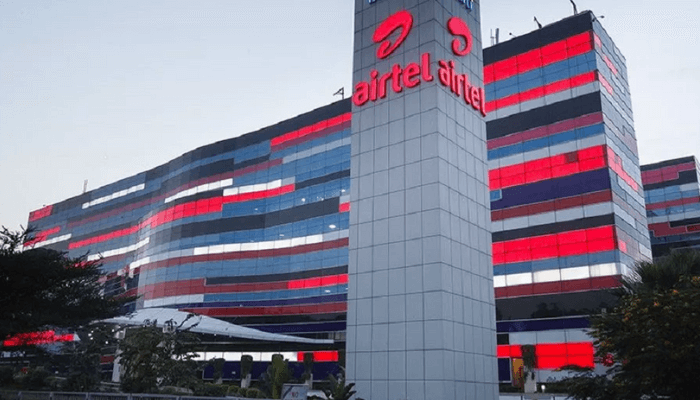
The average Airtel Nigeria customer used 14.9 gigabytes of mobile data every month in the first quarter of 2026. That is up from 11.8GB in the same period last year, and it is one of the clearest signs yet that Nigeria’s appetite for mobile internet has moved well beyond casual browsing.

The figures come from Airtel Africa’s quarterly results for the period ended June 30, 2026, released on July 23. The results show Nigeria driving some of the strongest numbers across all 14 of Airtel Africa’s markets on the continent.
Airtel Africa recorded a 56.3% year-on-year increase in data traffic during the first quarter of its 2026 financial year, with Nigeria emerging as one of the strongest contributors to the growth as smartphone adoption and mobile internet usage accelerated across the country.
In Nigeria, smartphone penetration climbed to 56.1%, while average monthly smartphone data usage rose sharply to 14.9GB per customer from 11.8GB a year earlier.
Data revenue in the Nigerian market increased by 38% in constant currency, supported by an 11% expansion in the data customer base to 32.5 million subscribers and a 24.9% rise in data average revenue per user (ARPU).
In simple terms, not only are more Nigerians getting online through Airtel, those who are already online are spending more and using more data than before.
The Nigerian operation ended the quarter with 60.1 million customers, representing a 12% increase compared with the same period last year.
Overall, Airtel Nigeria recorded revenue growth of 50.4% in reported currency to $501 million during the quarter, while constant currency revenue rose by 29.8%. That makes Nigeria far and away the most important single market in Airtel Africa’s portfolio.
Airtel Africa’s total customer base grew by 11.6% to 189 million, while its data customer base expanded by 15.5% to 87.3 million across its operations.
The surge in data consumption was driven by growing demand for mobile internet services for work, education, entertainment, financial services and e-commerce.

More Nigerians are now working remotely, streaming video content, taking online courses, sending money through apps and shopping on platforms like Jumia. Each of these activities eats data, and the numbers show that Nigerians are not slowing down.
Sunil Taldar, CEO of Airtel Africa, said smartphone penetration reached 51.0% across the group, an increase of 5.2 percentage points over the last year, reflecting continued progress in digital adoption across markets. “Supported by sustained investment in our network, this has driven a 56.3% increase in data traffic as customers embrace digital solutions across our markets,” he added.
To match the surge in demand, Airtel Africa significantly accelerated its network investment during the quarter. Capital expenditure more than tripled to $389 million, compared with $121 million in the same period last year, as the operator expanded its network infrastructure across its markets.
The company added more than 920 new sites during the quarter, representing its highest first-quarter rollout, while extending its fibre network to 82,100 kilometres. Airtel Africa also disclosed that its 5G network is now operational in seven African markets, with 3,609 5G sites deployed across its operations.
The article does not specify how many of those 5G sites are in Nigeria, so that detail could not be confirmed from this source alone.
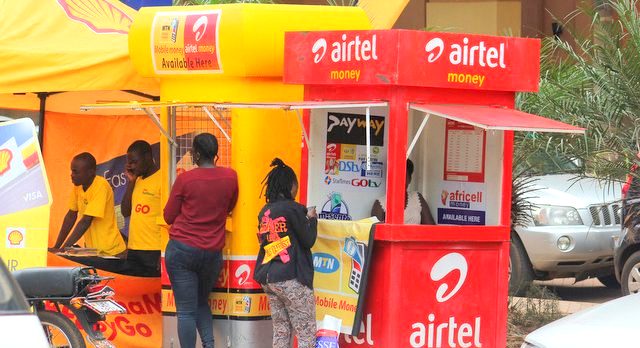
Beyond calls and data, Airtel Africa’s mobile money business also recorded strong growth during the quarter. Mobile money revenue increased by 30.3% in constant currency, while the customer base grew by 16.1% to 46.8 million users. The value of mobile money transactions processed during the quarter rose by 35.0% to $38 billion.
Earlier in 2025, Airtel and other Nigerian telcos raised their prices following approval from the Nigerian Communications Commission (NCC). Airtel Africa said the full impact of tariff adjustments introduced in early 2025 contributed to stronger customer spending on data services in Nigeria. The increase in data ARPU by 24.9% in Nigeria suggests that customers are not only consuming more data but are also willing to spend more on higher-quality connectivity and digital services.
Despite the higher prices, Airtel Nigeria’s customer base still grew by 12%, which suggests the demand for mobile internet in Nigeria is strong enough to absorb the cost increase.
Nigeria is consuming more mobile data than ever, and the numbers suggest this trend has room to run. As more Nigerians get smartphones, as 5G expands, and as more services move online, average monthly usage will likely keep climbing. For Airtel, Nigeria is not just a big market. It is the market that is pulling everything else forward.