

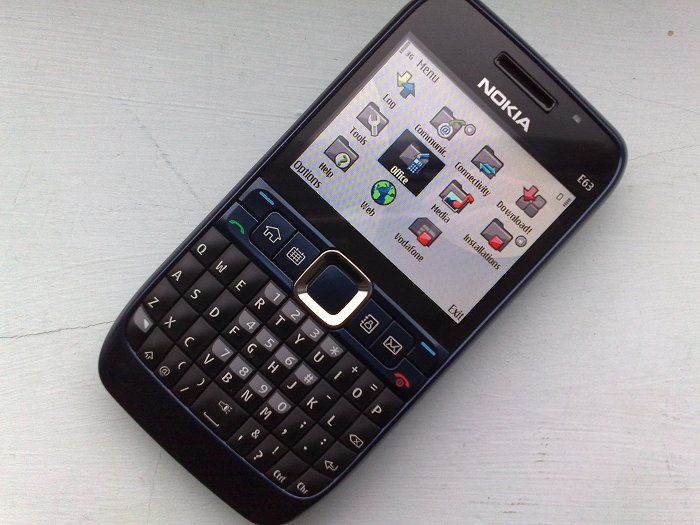
The Nokia E63 shipped in November 2008 with a 1500mAh battery, which is less than a third of what sits inside an average phone today, and Nokia quoted its standby life in weeks. My own E63 ran from Monday to Thursday without complaint while I made calls, sent texts, browsed a little and played Snake Xenzia during breaks. Modern phones carry three times the capacity and most people are hunting for a charger by evening. That gap says something worth examining rather than dismissing as nostalgia.
Symbian is properly dead, and has been for a while. Nokia announced its move to Windows Phone in February 2011, the Nokia 808 PureView in 2012 was the last Symbian device, and Nokia ended software support in January 2014. Java ME phones outlasted it in Nigeria by years, mostly because they were cheap and worked. I am not arguing anyone should go back to either. I am arguing that a few things those phones did well have never been matched, and it is worth being clear about which ones.
The battery life was real, and the reason for it is instructive
A Symbian phone spent almost all of its time doing nothing. There was no data connection held open, no apps syncing in the background, no notifications pulling the processor awake every few minutes, and the screen was small and dim enough to cost almost nothing when it was on. The phone woke up, did a thing, and went back to sleep. That is why a small battery lasted days.
Modern phones drain faster despite far bigger batteries because they are never fully idle. A bright, large, high refresh rate screen is the single biggest consumer, and constant connectivity keeps the radio and processor busy underneath it. We did not lose battery technology, we spent the gains on capability. That is a reasonable trade for most people, though it does mean the phone stopped being a device you can simply forget about for a few days.
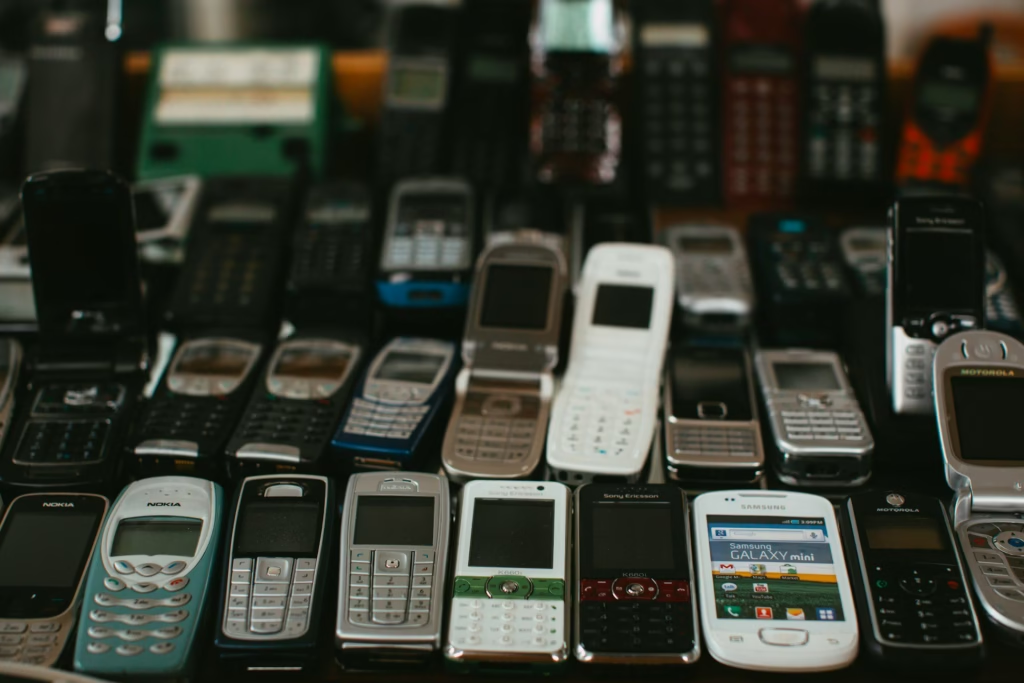
They were built to survive Nigerian conditions and modern phones are not
Drop a Nokia E71 on concrete and the battery cover comes off, so you snap it back on and carry on with your day. Mine came off an okada at speed once and worked perfectly after a dusting. The reason is not that Nokia was braver about engineering, it is that a small plastic-bodied phone with a tiny screen and no glass front has almost nothing on it to break. Modern phones are glass on both faces because that is what a large display and wireless charging require.
Those keypads also lasted. I used my E63 for three years and every key still worked properly when I finally moved on, which is not something most people can say about a touchscreen digitiser after the same period. We now spend real money on cases, screen protectors and occasionally insurance to compensate for a fragility that is structural rather than accidental. If durability genuinely matters more to you than screen size, rugged phones still exist and nobody buys them, which suggests most of us made our choice.
The limitations were the feature, not the compromise
Those phones did not demand attention because there was nothing on them worth returning to. You used the phone, put it in your pocket, and went back to whatever you were doing. Symbian had email and a browser, but both were slow and awkward enough that you opened them on purpose rather than out of habit. There was no feed to fall into.
I was more present in conversations then, and I do not think that is rose-tinted. The device simply could not compete with the people in front of me. What changed is not that we became weaker willed, it is that the phone became genuinely more interesting than most of what surrounds it, and it is designed by people whose job is to keep it that way. Understanding that is more useful than blaming ourselves for it.
Java games were complete products in a way mobile games no longer are
Snake Xenzia, Bounce Tales, Diamond Rush, Midnight Pool and Brothers in Arms all shared a quality that has since disappeared. You opened the game and it started. No internet, no account, no update, no advert every ninety seconds, no currency to buy. Whatever you paid for it, or more likely whatever you loaded onto it from a Java site, was the whole thing.
They were also tiny, so a phone with a few megabytes of storage held dozens of them. A single mobile game now runs to several gigabytes and is usually built to extract money over time rather than to be finished. The comparison is not really about graphics, it is about business models. Java games were sold once and designed to be enjoyed, and that model barely exists on phones any more.
Physical keyboards were faster and nothing replaced them
Typing on an E63 or E71 keyboard was quick and accurate because your fingers could feel where the keys were. You could write a long message without looking at the screen, one-handed, and know what you had typed. I wrote entire blog posts on that keyboard without my hands hurting.
Touchscreen keyboards gave us the screen space and took the accuracy. Autocorrect changes words you meant, keys have no physical separation so fingers land in the wrong place, and long messages become a chore. People say you get used to it, and you do, though getting used to something is not the same as it being better. This is the one item on the list where I think we straightforwardly lost and got nothing back.
What those phones were genuinely bad at, which nostalgia tends to skip
They were slow and expensive to communicate on. Before WhatsApp, staying in touch meant SMS at per-message rates, and calls were charged per minute in a way that made people ration them. A Nigerian family spread across states spent real money on contact that now costs a fraction of a data bundle. That alone outweighs most of what is on this list.
They also had no meaningful security model, which mattered less then and would be catastrophic now. There was no app sandboxing worth the name, no regular patching, and Symbian malware was a genuine problem in its later years. Put a banking app on a phone with no security updates since 2014 and you have a serious problem rather than a nostalgic one. Add to that no usable maps, cameras that were poor by any standard, and browsers that could not open most of the modern web, and the case for going back collapses quickly.
The biggest one for Nigeria specifically is banking. Transfers, USSD alternatives, POS reconciliation and the whole mobile money layer that people now run their businesses on did not exist in usable form on those devices. Whatever we gave up, we got something that changed how money moves in this country, and that is not a small trade.
What is actually worth reclaiming
My E63 still sits in a drawer and I put a SIM in it every few months for a day. The battery still holds, the keyboard still feels right, and by the evening I want my maps and my banking app back. That is the honest shape of it, and I suspect most people who romanticise these phones would last about the same length of time.
The useful part is not the hardware, it is the relationship. Notifications can be turned off, and most of them should be. A phone can go in a drawer during dinner. Games that respect you still exist if you look past the free-to-play tier. None of that requires a Symbian device, it requires deciding that the phone is a tool rather than a companion, which is exactly how we treated those old Nokias without ever having to think about it. If your current phone is the problem, our guide to extending Android battery life and the case for a simpler home screen get you closer to that than a trip to the drawer will.