

Millions of Nigerians who depend on airtime and data lending services are watching a courtroom battle with growing anxiety. A fresh legal move by telecom value-added service providers could disrupt the borrowing services that roughly 40 million people use to stay connected every day.
The Wireless Application Service Providers Association of Nigeria, known as WASPAN, has asked the Court of Appeal to stop the Federal Competition and Consumer Protection Commission from enforcing its Digital, Electronic, Online or Non-Traditional Consumer Lending Regulations, known as the DEON Regulations, while its appeal is still being heard.
This is not the first time Nigerians have faced the prospect of losing airtime lending services. Earlier this year, a similar regulatory dispute led to a six-month suspension of airtime and data credit services before they were eventually restored.
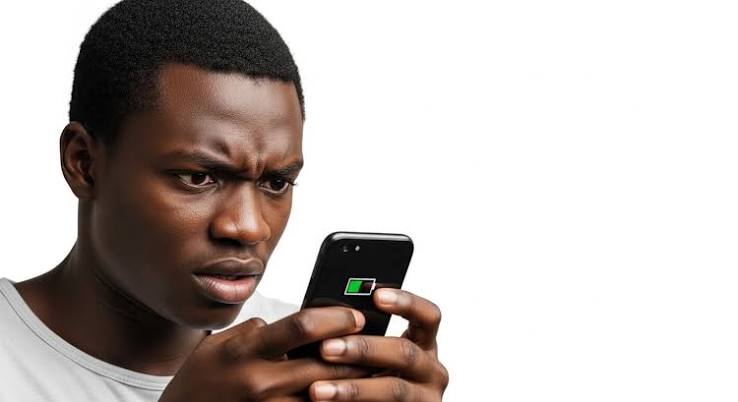
For many Nigerians, that suspension left a mark. Lagos-based worker Farouk Rabiu described the experience as devastating, saying he had been counting on borrowed credit to access his bank account after running out of data, only to find the service completely unavailable.
That memory is exactly why the current situation is causing fresh alarm.
Don't Miss This Article

WASPAN represents licensed value-added service providers, the companies that operate airtime and data lending products through Nigeria’s telecom networks. The association is challenging the FCCPC’s DEON Regulations, which were upheld by the Federal High Court in Lagos on July 20, 2026.
WASPAN has gone to the Court of Appeal to contest that ruling and, critically, is asking the court to restrain the FCCPC from enforcing the regulations while the appeal is being determined. The association argues that immediate enforcement would expose operators to sanctions, create regulatory uncertainty, and potentially disrupt the airtime credit and data advance services that millions of Nigerians rely on daily.
The FCCPC has pushed back firmly, insisting it has both the right and the responsibility to enforce the regulations now that the Federal High Court has ruled in its favour.
Don't Miss This Article

The Commission says the DEON Regulations are designed to clean up the digital lending industry, crack down on predatory debt recovery practices, protect consumers’ personal data, and drive illegal digital lenders out of the market. It argues that continued suspension of enforcement is what actually harms consumers, not the regulations themselves.
ALTON Chairman Gbenga Adebayo put the stakes in perspective with unusual clarity. He said the earlier disruption proved that airtime credit has grown into something far bigger than a standard telecom product. He described it as economic infrastructure, used by roughly 40 million people on a regular basis, with most of them sitting at the lower end of the income scale.
Adebayo’s point is important because it explains why this dispute matters so much beyond the legal arguments. For a subscriber in a rural area or someone living paycheck to paycheck in Lagos, the ability to borrow N50 or N100 of airtime when their balance hits zero is not a luxury. It is the difference between staying connected and being cut off completely.
Seun Sofoluwe, a resident of Abeokuta, put it in the most practical terms possible. He said another interruption would be especially damaging for people who practice what is sometimes called debt-to-debt servicing, where a subscriber repays an outstanding airtime loan the moment credit arrives, purely to qualify for another advance. That kind of behaviour shows just how deeply embedded these services have become in how some Nigerians manage daily communication costs.
The outcome now rests with the Court of Appeal, which must decide whether to grant WASPAN’s request to halt enforcement while the appeal is heard. If the court agrees, the FCCPC’s enforcement is paused again and services continue uninterrupted. If the court refuses, enforcement resumes immediately and the risk of disruption becomes real.
There is no confirmed date yet for when the Court of Appeal will rule on WASPAN’s request. Until that decision comes, the 40 million Nigerians who use airtime lending services are in a waiting game they did not ask to be part of.
Don't Miss This Article

At its core, this is a dispute about who has the authority to regulate telecom-based lending and what rules that market should follow. The FCCPC says it is protecting consumers. WASPAN says enforcement right now would hurt the very consumers the regulations claim to protect.
Both sides have a point, which is exactly what makes the Court of Appeal’s decision so consequential. What is not in dispute is that ordinary Nigerians, the ones borrowing N100 of airtime at a time to stay connected, are the ones who will feel the outcome most directly.