



For decades, registering to vote in Nigeria meant one thing: joining a long queue under the sun, sometimes for hours, sometimes across multiple days, at a crowded INEC office. That experience is now changing. The Independent National Electoral Commission has launched a self-service online Continuous Voter Registration platform that allows eligible Nigerians to complete significant parts of the process from home, including biometric capture, without stepping into a registration centre first.
The platform is one of the boldest digital steps INEC has taken in its history, and early numbers suggest Nigerians are beginning to take notice.
As of June 26, 2026, INEC reported that 1,565,873 Nigerians had successfully completed voter registration during the ongoing Continuous Voter Registration exercise. Of that number, 620,933 completed their registration online, while 944,940 registered physically.
That means nearly 40% of all new registrations during this exercise were done online. For a country where government digital services have historically struggled with adoption, that figure is significant.
INEC extended the CVR deadline beyond its original closing date of July 10, 2026, to July 26, 2026, giving more eligible Nigerians the opportunity to register ahead of future elections.
Don't Miss This Article

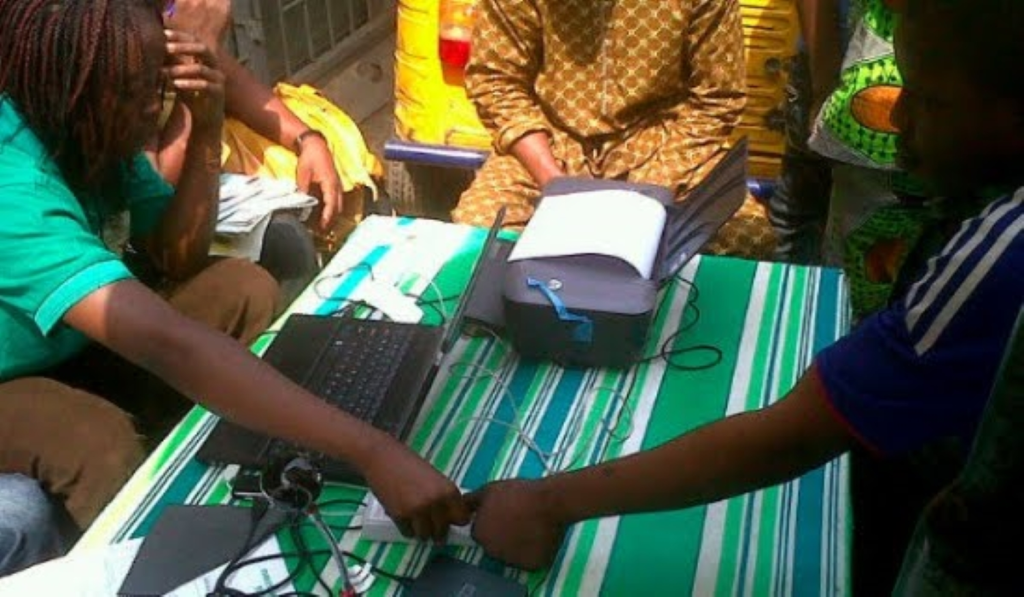
The online CVR platform is not just a form to fill. It enables citizens to register as first-time voters, capture biometric information digitally, update personal voter information, transfer polling locations, replace lost or damaged Permanent Voter Cards and manage voter registration records online.
In plain terms, many of the things that previously required a physical visit to an INEC office can now be done from a phone or laptop with an internet connection.
Omotolani Kawojue, an assistant manager at a beauty salon, described the experience as far easier than he expected. “It was a straightforward one. There’s really nothing much to it. It simplified the process of the registration,” he said. Although he encountered a temporary delay during phone number verification, the issue was resolved quickly.
For Kawojue, the biggest win was simple: no queue, no travel, no wasted day.
Don't Miss This Article

Recent university graduate Ogunpitan Tomisin had a similar experience. “The platform was quite easy to use. The instructions were clear, so I didn’t need anyone to guide me through the process,” she said. “It saved me time because I completed most of the registration from home.”
Not everything has gone smoothly. Kawojue pointed to compatibility issues affecting Apple users, noting that several iPhone users experienced difficulty downloading the application required for biometric fingerprint capture. “Many iOS users couldn’t download the CVR app to scan their fingerprints. They should make the app available on Apple Store to include all devices in the registration process,” he said.
This is not a small concern. iPhones are widely used in Nigeria, particularly among younger, urban voters who are exactly the demographic INEC is trying to reach through this digital platform. A government service that does not work on iOS risks excluding a large group of potential registrants.
Beyond technical issues, Tomisin identified what may be an even larger problem: most young Nigerians simply do not know the online option exists.
“I think it is a good improvement, but many young people around me didn’t know they could begin their registration online,” she said. She recommended that INEC expand awareness campaigns through universities and social media platforms where young Nigerians spend most of their time.
This is a pattern that shows up again and again with government digital services in Nigeria. The platform gets built. The press release goes out. But the people who need it most, especially first-time voters in schools and lower-income communities, often never hear about it.
Digital registration can significantly reduce congestion at INEC registration centres, allowing officials to focus resources on applicants requiring physical assistance. Online services also help remove geographical barriers for citizens living far from registration centres, and digital platforms reduce manual data entry errors while enabling more efficient record management.
Don't Miss This Article

For younger Nigerians especially, a smoother registration experience could make the difference between choosing to vote and not bothering at all.
The online CVR platform is a genuine step forward for Nigerian democracy. But a working platform is only half the job. iOS compatibility needs to be resolved. Awareness campaigns need to reach students, market traders and first-time voters who are not following government press releases. Internet access in rural areas remains a barrier for millions. And cybersecurity for sensitive voter biometric data must be airtight. INEC has built something worth using. Now it needs to make sure every eligible Nigerian actually knows it is there.