
If you have ever connected to free Wi-Fi at a café, airport, or shopping mall just to check your bank balance, a cybersecurity expert has a clear warning for you. “The most vulnerable,” says Hazadat Barakat Oyindamola, a cybersecurity analyst at Utica, “is your bank account because that’s where your money is.” That warning comes as more Nigerians than ever are connecting to public Wi-Fi networks across the country, often without realizing just how exposed their personal information can become. Free public Wi-Fi has become an integral part of everyday digital life across Nigeria, connecting millions of people in cafés, restaurants, airports, shopping centres, universities, and other public spaces.

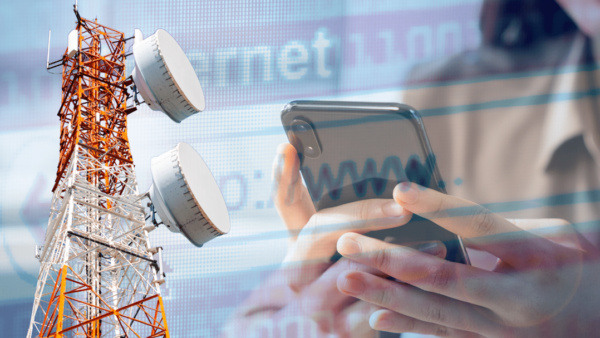
The numbers behind this growth are significant. According to the latest industry statistics released by the Nigerian Communications Commission, active telephone subscriptions rose to 188.01 million in April 2026, while active internet subscriptions climbed to 154.35 million. Broadband penetration also reached 55.67 percent, highlighting the growing reliance of the population on digital connectivity for banking, e-commerce, remote work, education, and social networking. For millions of Nigerians seeking to reduce mobile data costs, connecting to a free wireless network has become almost instinctive.
Here is the part most people don’t realize. Internet users have little practical way of verifying whether a public Wi-Fi hotspot is genuine or has been created by cybercriminals to lure unsuspecting victims.
“There’s absolutely no way you can identify whether a public Wi-Fi network is legitimate or potentially malicious,” Oyindamola says, explaining that once a network is publicly accessible, virtually anyone can connect.
That openness is exactly what makes these networks dangerous. That openness creates opportunities for attackers to quietly position themselves alongside legitimate users, monitoring internet activity or attempting to intercept sensitive information without attracting attention. As Oyindamola puts it, “As long as it is public, there is going to be an open gap to exploit it.”
Unlike mobile broadband connections, which are individually secured between a subscriber and a telecoms provider, public Wi-Fi networks are typically shared by dozens, or even hundreds, of users at the same time. This shared environment makes it easier for attackers connected to the same network to observe or manipulate internet traffic, particularly where the network lacks strong security controls or users access websites and applications without adequate encryption.
While bank accounts top the danger list, they are far from the only thing at risk. Email accounts are another major concern because they often serve as the gateway to numerous other online services. Once attackers gain access to an email account, they may be able to reset passwords, impersonate victims, distribute phishing emails, or launch additional attacks against friends, colleagues, or family members. Social media accounts can also be exploited to spread fraudulent investment schemes, impersonation scams, and other forms of cyber-enabled fraud.
This isn’t just a Nigerian concern. The risks highlighted by Nigerian cybersecurity experts mirror warnings issued by global cybersecurity companies, including Kaspersky, which has repeatedly cautioned users about the dangers associated with unsecured public wireless networks.

Cybercriminals, Kaspersky warns, commonly exploit public Wi-Fi through techniques such as man-in-the-middle attacks, rogue or fake hotspots, and data interception. In these attacks, criminals may capture unencrypted internet traffic, steal usernames and passwords, or redirect victims to fraudulent websites designed to harvest banking credentials and other sensitive information.
Cybercriminals frequently exploit the trust users place in familiar public locations, including cafés, airports, hotels, and shopping centres, where free internet access is routinely offered. One particularly deceptive tactic involves creating fake wireless networks with names that closely resemble legitimate ones, making it extremely difficult for users to distinguish between genuine and malicious connections.
The good news is that public Wi-Fi doesn’t have to be avoided completely. Cybersecurity professionals emphasise that public Wi-Fi is not inherently unsafe if users adopt appropriate security practices. One of the most effective protective measures is using a reputable Virtual Private Network, which encrypts internet traffic between a user’s device and the internet, making intercepted data significantly more difficult for attackers to read.
But be careful which VPN you pick. Not all VPN services provide the same level of protection. Some free VPN applications have themselves been linked to questionable data collection practices and malicious software, making reputable paid services the safer choice where privacy is a priority. “Always use VPN… although there’s no 100% safe VPN, at least you are safer to some extent,” Oyindamola advises.
Beyond using a VPN, experts recommend a few simple habits. Avoid accessing banking platforms or other financial services while connected to public Wi-Fi. Refrain from logging into email accounts or other sensitive online services on unsecured networks. Disable automatic connections to open Wi-Fi hotspots. Avoid entering passwords, payment details, or other confidential information unless using a trusted, encrypted connection. Restrict public Wi-Fi use to low-risk activities such as reading news or browsing publicly available content.
Nigeria’s expanding availability of public Wi-Fi supports broader national objectives around digital inclusion, internet accessibility, and economic participation, enabling students, entrepreneurs, remote workers, and consumers to access online services while reducing data costs.
But experts are clear that access alone isn’t the full picture. Experts argue that expanding digital access must be accompanied by stronger public awareness of cybersecurity risks if the benefits of connectivity are to be fully realised.
Next time you’re tempted to log into your banking app while connected to free Wi-Fi at a mall or restaurant, remember what the experts are saying: there is no way to know for certain whether that network is safe. Saving a little mobile data isn’t worth the risk to your bank account. Save the banking and email logins for your mobile data or a trusted home network instead, and treat public Wi-Fi as fine for browsing, but not for anything involving your money or personal information.