
Nigeria’s road construction boom is quietly tearing apart the country’s internet backbone. Road construction, excavation and other civil works caused more than 5,000 fibre-optic cable cuts across Nigeria in the first six months of 2026, the Nigerian Communications Commission has disclosed.

That is an average of more than 27 fibre cuts every single day, for six straight months. And the NCC is now saying clearly that this is no longer just an inconvenience for telecom operators. It is a threat to national security.
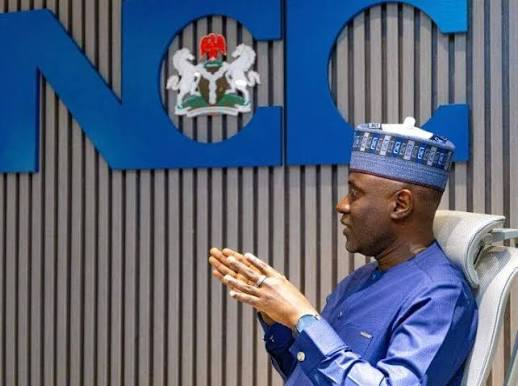
The NCC Executive Vice Chairman, Dr Aminu Maida, speaking at a Stakeholder Workshop on the Protection of Fibre Optic Cables during road construction, rehabilitation and other civil works in Abuja, said fibre infrastructure has become a lifeline for banking, government services, education, healthcare, commerce, security and emergency communications, meaning that damage to a cable could have consequences far beyond the immediate cost to a telecommunications operator.
He made the stakes concrete with a real example. He recalled that fibre cuts in February 2024 caused an almost network-wide disruption for one telecommunications operator, leaving millions unable to make calls, send messages or access the internet for several hours. The disruption subsequently placed pressure on other networks as affected subscribers migrated to them, illustrating how damage to a single network could trigger wider consequences for the economy and citizens.
Maida was direct about what a fibre cut really costs. He said a damaged fibre cable is not simply a cost to an operator but a cost to Nigerians and to the wider economy.
The commission said the incidents were largely linked to poor coordination between construction companies, government agencies and telecommunications operators before excavation work commenced.
Maida identified the specific failure point without ambiguity. He noted that before the first shovel entered the ground, there was often little or no coordination, identifying the absence of early engagement among stakeholders as a major factor behind the incidents.
He noted that roads and fibre networks were both critical infrastructure for national development, stressing that the expansion of one should not come at the expense of the other.
This is a coordination failure that has a straightforward solution: require construction companies to contact telecom operators and verify underground cable routes before any digging begins. The fact that this is not consistently happening after years of documented fibre cuts suggests the problem is systemic rather than accidental.
The national security framing came from the Office of the National Security Adviser, which sent its Director of Critical National Assets and Infrastructure Protection to the workshop.
Air Vice Marshal Effiom Enebong Ewa said every damaged fibre cable represented more than a technical fault, given its impact on governance, economic productivity, public services and the lives of Nigerians. He said fibre-optic infrastructure had been designated as Critical National Information Infrastructure and warned that negligence, interference or actions that exposed such assets to damage could constitute offences under Nigerian law.

The word “offences” matters here. This is not just a regulatory warning. It is a signal that those responsible for damaging fibre infrastructure could face legal consequences under Nigeria’s cybercrime and critical infrastructure protection frameworks. Whether that threat will actually be enforced against road contractors in practice remains to be seen.
The NCC chief said the Federal Government had taken steps to address the recurring problem through the Standing Committee on the Protection of Fibre Optic Cables, inaugurated by the Permanent Secretaries of the Federal Ministry of Works and the Federal Ministry of Communications, Innovation and Digital Economy. He said the committee was mandated to establish practical coordination mechanisms before, during and after road construction and other civil works.
The Federal Ministry of Communications also pointed to a broader structural fix on the horizon. The Permanent Secretary noted that the National Economic Council had approved a memorandum on the harmonisation of right-of-way charges and directed the ministry to develop standards and guidelines for the implementation of shared infrastructure, including the proposed “dig once” approach.
The “dig once” principle is well established in other countries. Rather than allowing multiple agencies and companies to repeatedly excavate the same roads to lay different types of cable or pipe, a single excavation is done once and multiple operators share the conduit. It significantly reduces the number of times ground is broken and therefore the number of opportunities for accidental fibre damage.
Maida urged telecommunications operators to provide accurate information on cable routes, contractors to verify infrastructure locations before excavation, and government agencies to facilitate timely information sharing. He stressed that coordination must be part of every relevant project’s design and execution.
The workshop brought together government ministries and agencies, telecommunications operators, construction companies, contractors, security agencies and other stakeholders to examine the causes of fibre cuts and develop preventive measures.
Nigeria is simultaneously trying to build more roads and lay more fibre. The Federal Government’s Project BRIDGE aims to deploy 90,000 kilometres of additional fibre across all 774 local government areas. At the same time, road rehabilitation and construction is accelerating across multiple states.
Without enforced coordination between these two programmes, they will keep working against each other. Every new road built without proper fibre mapping is another opportunity for a cable cut. Every cable cut is another interruption to the banking, health, education, and government services that run on that infrastructure.
Maida put the human cost of getting this right in the clearest possible terms. He said every fibre cut prevented is more than an engineering success. It is a call that connects, a payment that goes through, a lesson that continues, a public service that remains available.
Five thousand cuts in six months says Nigeria is still far from getting this right. The workshop in Abuja is a necessary step. Making coordination legally mandatory before any shovel touches the ground is what actually fixes it.