

Nigeria’s GSM network turned 25 this month. Commercial mobile telephone service launched on August 5, 2001, and the numbers since then are genuinely remarkable. Telephone connections have grown from 400,000 NITEL lines in 2000 to 320 million connected lines in 2026, with 189 million remaining active as of May. Teledensity has hit 87.5 percent. Broadband penetration stands at 56.11 percent.

But behind those headline figures sits a more uncomfortable reality. Twenty-one million Nigerians across 4,834 communities still cannot make a mobile phone call. Eighteen states remain below the critical 2,000 kilometre fibre deployment benchmark. And in the past year alone, operators recorded 27,685 fibre cuts, 27,000 access denial incidents, and 4,210 theft cases.
Twenty-five years of GSM has produced two Nigerias, one digitally connected and racing ahead, the other still waiting to be reached.
Only 14 states have fibre deployment above 2,000 kilometres, a critical benchmark for robust broadband penetration. Lagos leads the pack with an impressive 11,586.7km of fibre and 7,996 BTS sites, followed by the FCT Abuja with 6,973.13km and 2,884 BTS sites.
Other strong performers include Rivers (4,616.01km), Kano (4,616.71km), Edo (4,789.72km), Delta (4,202.62km), Ogun (4,246.48km), Kaduna (4,339.85km), Niger (3,383.43km), Benue (3,187.34km), Oyo (3,585.15km), Anambra (2,547.34km), Plateau (2,567km) and Kwara (2,410.13km).
The contrast with the bottom of the table is stark. States like Bayelsa (656.87km fibre, 436 BTS sites), Ebonyi (586.92km fibre, 422 BTS sites), Zamfara (1,100.98km fibre, 362 BTS sites), Yobe (1,526.82km fibre, 433 BTS sites), and Taraba (1,549.5km fibre, 673 BTS sites) illustrate the depth of Nigeria’s digital divide.
Put simply, Lagos has nearly 20 times more fibre than Ebonyi. That gap translates directly into which businesses can operate digitally, which students can access online education, which patients can access telemedicine, and which communities can participate in the digital economy at all.
The operators are not simply choosing to ignore these states. The economics make the choice for them.
Industry analysts pointed to two major barriers: insecurity and poor investment returns. In the North-East and North-West, insurgency and banditry have made fibre deployment risky and costly. Operators face vandalism of fibre cables, destruction of BTS sites, and threats to personnel. In rural states, low population density means fewer subscribers, translating to poor returns on multimillion-dollar investments in fibre and BTS infrastructure.
Borno with 1,012.52km fibre and 579 BTS sites remains hamstrung by insurgency, while Jigawa (970.1km fibre, 565 BTS sites) struggles with low commercial viability.
Oyaje Idoko, Founder and CEO of Layer3, put the private investor’s calculation plainly. He said that as a private investor, before extending service to a new community, the question must be whether it is commercially viable, adding that if a community cannot afford the service or power is unreliable, the business simply will not survive.
Even in states that have formally waived Right of Way charges, the actual cost of deploying infrastructure is often still high. ALTON Chairman Gbenga Adebayo explained the problem directly.
He said some states will claim zero Right of Way but then add developmental levies, educational levies, effluent discharge levies, environmental levies, and capital deployment fees per linear metre, making a ridicule of the zero Right-of-Way claims. In other states, the cost and hostility from government officials is so prohibitive that it simply does not make commercial sense to deploy there.
Adebayo also flagged a third category. He said some states simply do not care about ICT at all, and their attitude to revenue officials is essentially that operators either pay and work, or do not pay and do not work, and these are the issues affecting deployment in many areas whether anyone likes it or not.

Infrastructure vandalism and low ROI are not the only pressures. Energy is a hidden crisis inside the telecom sector’s cost structure.
Telecom operators spend 30 percent of their operating expenditure on energy to power their over 40,000 base transceiver stations spread across the country.
MTN Nigeria Chief Operating Officer Ayham Mousa said 70 percent of network downtime is traceable to lack of power, with increasing fibre cuts and vandalism making up most of the rest.
This means that even where towers exist, they may not be functioning reliably because of the energy costs required to keep them running.
The vandalism statistics from the past 12 months are striking in their scale. In the last one year, operators recorded over 27,685 fibre cuts, 27,000 access denial incidents, and 4,210 theft cases.
Adebayo said ALTON has not abandoned any part of the country despite these challenges. He said that where infrastructure has been lost to non-state actors, it has been replaced, with the support of security agencies sought to allow access, adding that even in the most difficult accessible territories, assets lost to vandalism or insecurity are being replaced.
The consequences of this uneven distribution are already playing out. President of the National Association of Telecom Subscribers of Nigeria, Deolu Ogunbanjo, said the implication of uneven distribution is huge and detrimental to economic growth, warning it will further trigger rural-urban drift because there is no telemedicine and several other digital services, and that if operators invest in those areas, the rural-urban drift may reduce.
Lagos and Abuja host the widest range of operators, including Globacom, MTN, Airtel, IHS, MainOne, Phase3, Spectranet, SwiftNet, Broadbased, Layer3, and ATC. In contrast, states like Kebbi, Taraba, and Yobe are served by only four operators, limiting competition and service quality.
Four operators competing for a market versus eleven is not just a business statistics difference. It is the difference between competitive pricing, network investment, and service quality for the people living in those states.
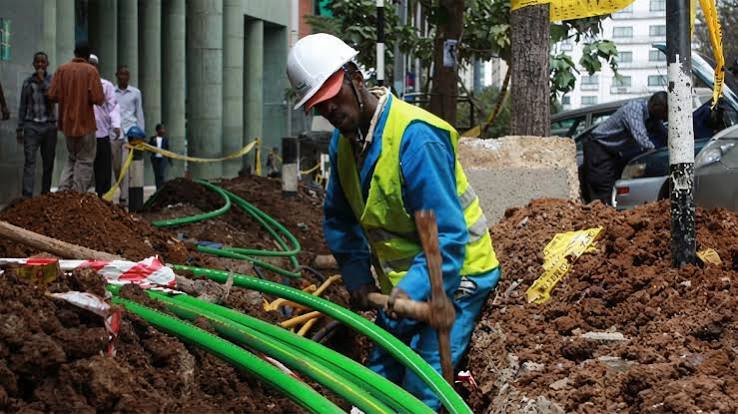
The Federal Government is not standing still. To close Nigeria’s connectivity gap, the Federal Government is implementing Project BRIDGE, a programme expected to deploy an additional 90,000 kilometres of fibre across all 774 local government areas. The project has already secured a $200 million loan from the African Development Bank Group and a further $100 million investment commitment from the European Bank for Reconstruction and Development.
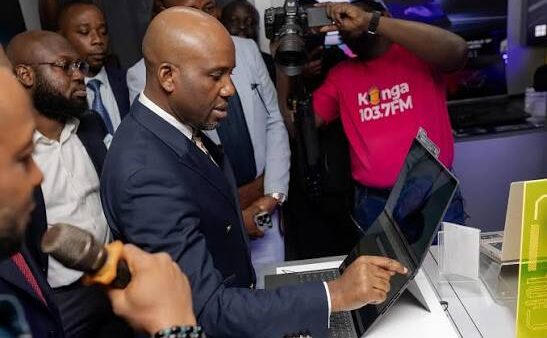
Minister of Communications Bosun Tijani announced last week that physical deployment will begin within weeks. He said all resource mobilisation and contractual processes for the nationwide fibre project have been completed, and that people will start seeing deployment happening around the country, describing it as something that will transform Nigeria for good.
NCC Executive Vice Chairman Dr Aminu Maida was careful to note what Project BRIDGE alone cannot do. He said the backbone expansion must be complemented by last-mile infrastructure that brings capacity from national routes into homes, offices, schools, hospitals and communities, and that this is where Fibre-to-the-Home becomes central.
Nigeria’s National Broadband Plan had envisioned 70 percent broadband penetration by 2025, but the target was not met. Nigeria finished 2025 at 51.97 percent broadband penetration, climbing to 56.11 percent as of May 2026, enjoyed by 121 million people.
That still leaves tens of millions of Nigerians on the wrong side of a gap that fibre cables, tower investments, and government programmes are slowly trying to close. Twenty-five years of GSM gave Nigeria a mobile revolution. The next chapter is about making sure that revolution reaches everyone, not just the cities that were always easiest to serve.