


Claude Code is about to become significantly more autonomous. Anthropic announced on August 9, 2026, that it is making auto mode the default setting for Claude Code on Pro, Max, and Team accounts, starting August 14.

For Nigerian developers and software engineers already using Claude Code as a coding assistant, this change means the tool will now work through tasks more independently, without stopping to ask for human approval at every single step.
When Claude Code is in auto mode, instead of presenting prompts asking for human approval at each step, it will proceed unless an action is determined to be irreversible, destructive, or aimed outside the user’s environment.
In simple terms, Claude Code will now make more decisions on its own during a coding session. It will keep working through a task without pausing to check in, unless it encounters something that could cause serious or permanent damage, like deleting files, making changes outside a defined project folder, or sending data somewhere external.
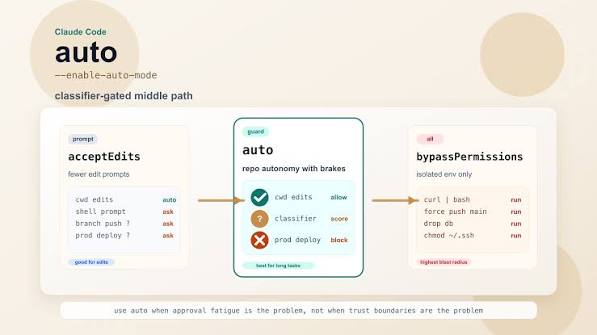
Previously, developers had to click through multiple approval prompts during a session. Auto mode removes most of those interruptions, making the experience closer to having an assistant that just gets on with the work.
The most striking part of Anthropic’s announcement is the research that backs up the change. In a study with 1,053 paid testers, auto mode caught 89 percent of harmful actions, while human review only caught 13.6 percent.
That is a significant gap. The reason, Anthropic suggests, is not that auto mode is simply smarter, it is that human review has become largely meaningless in practice. Manual review can become habitual, with users approving 97 percent of permission prompts in Claude Code.
When developers are clicking approve on 97 percent of prompts, they are not really reviewing anything. They are just clearing notifications. Auto mode removes that false sense of oversight and replaces it with a system that actually evaluates each action before proceeding.

Giving an AI coding tool more autonomy naturally raises questions about what happens when things go wrong. Anthropic addressed this directly. The company said it has been adding new safety features alongside the auto mode rollout, including prompt injection screening and customisable hard deny rules to prevent things like data exfiltration.
Prompt injection screening means Claude Code can detect attempts by malicious content in a codebase or external source to hijack what the AI does next. Hard deny rules let developers or organisations set firm boundaries on actions Claude Code is never allowed to take, regardless of what a prompt asks for.
Claude Code Head Boris Cherny said the team uses auto mode exclusively and has been doing so for many months, adding that he could not imagine going back to permission prompts.
That kind of internal adoption signal matters. When the team building the tool has already moved fully to the new default, it suggests the change is not an experiment but a deliberate product direction based on real daily use.
Claude Code is available through Anthropic’s API and is increasingly being used by Nigerian software engineers, startup developers, and tech professionals building products locally and for international clients. The shift to auto mode by default on August 14 will affect anyone already using Claude Code on a Pro, Max, or Team account.
For developers who prefer more control, Anthropic has not removed the ability to use manual mode. The change is a default setting, not a forced switch. Developers who want Claude Code to keep asking for approval at each step can configure their settings accordingly.
For those who have been frustrated by the constant approval interruptions during long coding sessions, auto mode becoming the default removes that friction immediately without requiring any configuration change.
The broader direction Anthropic is signalling with this change is clear. AI coding tools are moving away from the model where humans micromanage every action, toward one where the AI handles routine decisions autonomously while humans focus on higher-level direction and review. For developers who use Claude Code regularly, August 14 is the date that shift becomes the default experience.