
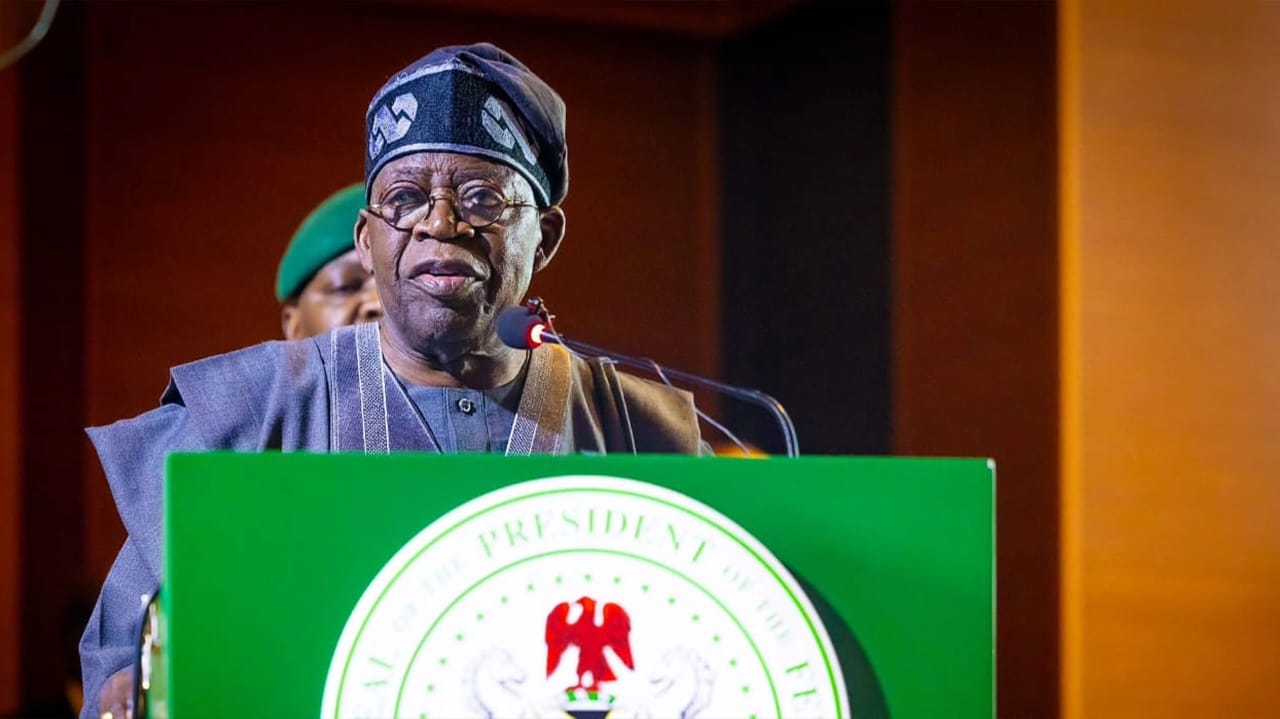
President Bola Tinubu says Nigeria will lean more on technology, science, and forensic tools to fight drug trafficking. He made this promise in Abuja at the grand finale of the 2026 International Day Against Drug Abuse and Illicit Trafficking, with his speech delivered through the Attorney General of the Federation, Lateef Fagbemi. Tinubu said drug trafficking keeps changing its tactics, so Nigeria’s response must also keep changing. He stressed that the damage from drugs goes beyond the user, hitting families, schools, workplaces, and national security as a whole.

According to Tinubu, the government plans to strengthen forensic laboratories and boost the technology and data tools used by security agencies. He said this is needed to keep up with drug networks that are becoming more organised and harder to track. He also pointed to stronger border checks, better surveillance at airports, seaports, and land borders, and closer teamwork with international law enforcement agencies as key parts of the plan. Tinubu added that the Renewed Hope Agenda is also pushing education, skills training, and entrepreneurship support to tackle the root causes that push people toward drug abuse in the first place.
At the same event, the Chairman of the National Drug Law Enforcement Agency (NDLEA), Mohamed Buba Marwa, shared numbers from the agency’s recent work. He said that in the last 18 months alone, the NDLEA made 29,262 arrests, secured 5,225 convictions, and seized more than 5.3 million kilograms of illicit drugs worth over ₦1.5 trillion.
Marwa also spoke about some major operations, including a joint effort with the United States Drug Enforcement Administration and authorities in Greece, France, and Switzerland that brought down a cartel he called the Amadi Simon group. He also mentioned the arrest of a 63-year-old Nigerian drug baron along with three Mexican nationals, tied to a cross-continental methamphetamine operation, and the discovery of a hidden meth lab in a forest in Tapa village, Oyo State.

Marwa said the NDLEA is not only focused on enforcement. Over the past 18 months, the agency ran more than 6,600 awareness programs in schools, workplaces, and other community spaces, reaching close to five million Nigerians. The agency also provided treatment and counselling to over 13,500 drug users across 31 rehabilitation centres nationwide. On top of that, the NDLEA is running a programme to help cannabis farmers switch to legal crops like cassava, maize, cocoa, and cowpeas.
Marwa said the agency is now investing more in deep web monitoring and advanced data analytics to track trafficking activity happening online. This fits with Tinubu’s call for sharper technology and better forensic capacity going forward. A professor from the University of Ibadan, Oluwatoyin Odeku, who gave the event’s guest lecture, said the progress made over the past five years shows the drug war is winnable, even though many doubted that when the NDLEA was revamped back in 2021.
Whether this push for more tech and forensics actually slows down trafficking will depend on how fast these tools get deployed and how well agencies use them. For now, the numbers from NDLEA suggest the fight has picked up pace, even if the bigger battle against drug networks is far from over.