


Nigerian businesses are rushing to adopt artificial intelligence, and most of them are moving faster than their security can keep up with. That is the core warning from 3Consulting, a Nigerian cybersecurity and technology consulting firm, which says the country’s growing AI adoption is outpacing the governance frameworks needed to make it safe. The firm says the risks are not just theoretical. They are already showing up in how cybercriminals are targeting Nigerian organizations today. Before AI, a phishing email, the kind designed to trick you into clicking a harmful link or handing over your login details, was often easy enough to spot. Bad grammar, suspicious sender addresses, and awkward phrasing were reliable red flags.
That is no longer the case. According to 3Consulting, AI-generated phishing messages have become so convincing that even experienced professionals are struggling to tell them apart from legitimate communications. The firm warned that you can no longer tell a fake email apart from a real one with the naked eye, which makes the old advice of “just look carefully” far less useful than it used to be.
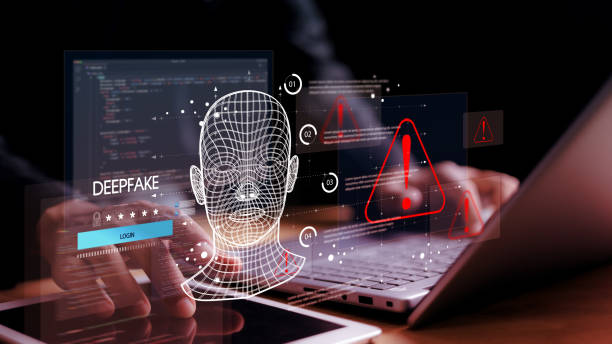
Deepfake technology has added another layer to this problem. Cybercriminals are now using AI to clone voices and create realistic video impersonations of executives, finance officers, and other trusted figures. In some cases, these fakes have been used to instruct employees to make urgent fund transfers, with the employee believing they were taking a direct order from a real senior colleague.
Not all AI risks come from outside attackers. 3Consulting highlighted a growing concern around what happens when employees use AI tools carelessly inside their own organizations. When staff members paste sensitive company data, customer records, financial details, or confidential strategies into consumer AI tools without proper oversight, that information can end up being used to train external AI models. Once that data leaves the company’s controlled environment, there is very little that can be done to retrieve it. This is not a hypothetical problem. It is already happening in Nigerian workplaces where AI tools have been adopted without clear policies on what information employees are allowed to share with them.
Beyond the threats most people already know about, 3Consulting flagged three specific AI-related attack methods that Nigerian businesses are largely unprepared for. The first is prompt injection. This is when a cybercriminal embeds hidden instructions inside content that an AI system will eventually process, such as a document, an email, or a web page. When the AI reads that content, it follows the hidden instructions without the user realizing anything unusual has happened. The result can be unauthorized actions, data leaks, or the AI behaving in ways it was never intended to.
Don't Miss This Article

The second is model poisoning. This happens when an attacker tampers with the data used to train an AI system. If the training data is corrupted, the AI model built from it will produce flawed or deliberately misleading outputs, often without any obvious sign that something has gone wrong. For a business relying on that model to make decisions, the consequences can be serious.
The third is inference attacks. These involve an attacker studying the outputs of an AI system to reverse-engineer sensitive information about the data it was trained on. Even if the original training data was never directly shared, a skilled attacker can sometimes reconstruct confidential details from the model’s responses alone.
3Consulting’s broader argument is not that Nigerian businesses should avoid AI. The firm is firmly in favour of adoption. The problem it is pointing to is that adoption without governance creates serious vulnerabilities that many businesses are not even aware of yet.

The firm is calling for Nigerian organizations to put proper AI governance frameworks in place before or alongside deployment, not after a security incident has already occurred. This means having clear policies on which AI tools employees can use, what data can and cannot be shared with those tools, how AI outputs are reviewed before being acted upon, and who is responsible when something goes wrong. Without these guardrails, businesses end up in a position where the same technology meant to improve their operations is also quietly expanding the number of ways they can be attacked.
3Consulting laid out a set of practical steps for organizations looking to adopt AI more responsibly. These include conducting AI-specific risk assessments before deploying new tools, establishing clear data governance policies that cover what information employees can share with AI systems, training staff to recognize AI-enabled threats like deepfakes and sophisticated phishing attempts, and running regular security audits of any AI systems already in use. The firm also stressed the importance of working with cybersecurity professionals who understand both AI and the specific regulatory environment Nigerian businesses operate in, since generic global advice does not always translate directly to local risks and compliance requirements.
For Nigerian businesses, the message from 3Consulting is straightforward. AI can genuinely improve how you work, cut costs, and help you compete. But treating it as a plug-and-play solution with no security considerations is a mistake that could prove expensive. The businesses that will benefit most from AI in the long run are the ones taking governance seriously now, before a deepfake, a prompt injection attack, or a data leak forces the issue.