
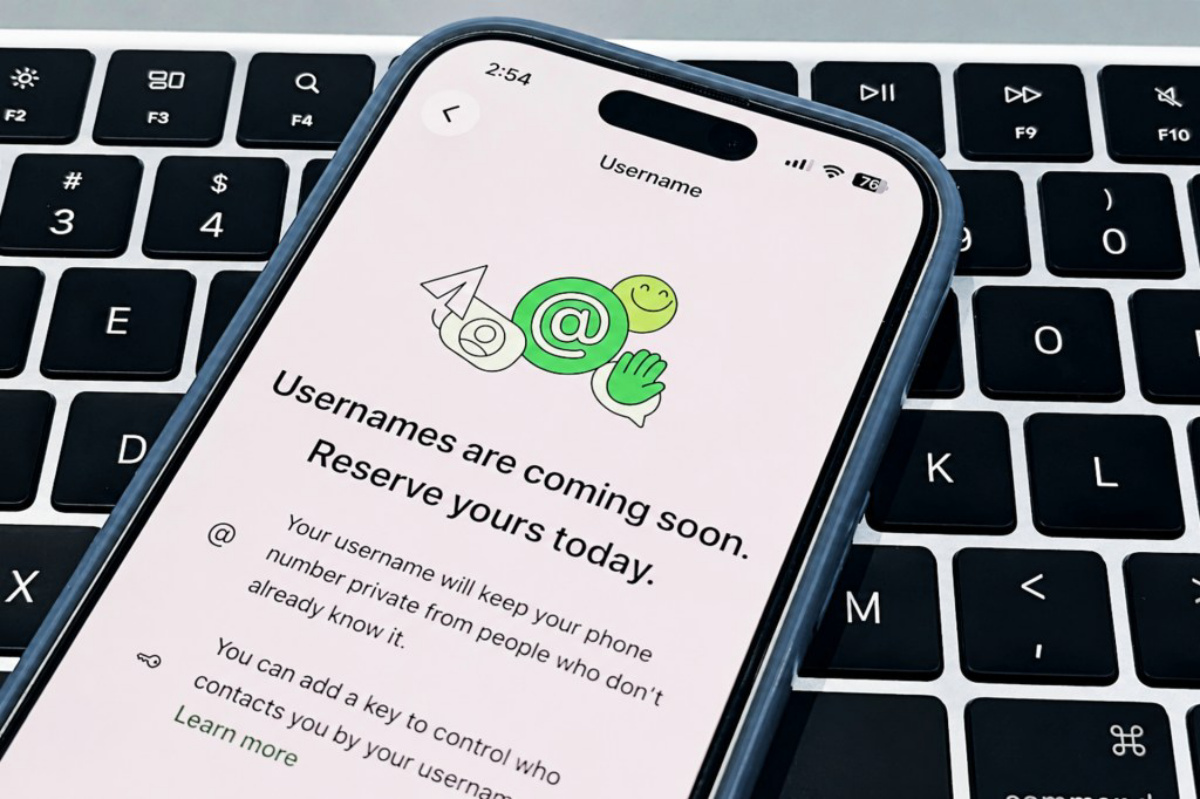
WhatsApp has started rolling out its username feature, and on paper, it is a genuinely good idea. Users can now create a unique name to share instead of their phone number. No more giving your digits to strangers. No more saving a number to send someone a message. Just share a username and connect.

The privacy logic makes sense but the execution will be a problem in Nigeria. Anyone who has spent real time on Nigerian WhatsApp knows exactly what is coming.
First, What the Feature Actually Does
Users can now go into their profile settings and create a username between 3 and 35 characters long. Only lowercase letters, numbers, periods, and underscores are allowed. Usernames cannot start with “www.” or end with a domain like “.com” or “.net,” specifically to stop people from impersonating websites.
Once set, the username works as a contact identifier. Someone can find and message you without ever seeing your phone number. When you change your username, people already chatting with you will see a system notification in the chat telling them the name changed. The feature is optional, meaning no one is forced to create a username if they prefer the existing system.
It sounds clean, But it is not going to stay clean in Nigeria.
The Impersonation Problem Is Already Here
The first and most obvious abuse is impersonation. Nigerians have been impersonating public figures, celebrities, pastors, business owners, and government officials on WhatsApp for years using display names and profile pictures alone. A display name costs nothing to change and requires zero verification. Usernames will be exactly the same.
Someone will claim @officialDangote or @PastorAdeboye or @MTNNigeria within the first week. Someone will set up @CustomerCare or @CBN_Official or @NairaMarket and start messaging people pretending to be a legitimate service. The username rules block “.com” endings and “www.” prefixes, but they do not stop someone from creating @mtn.support or @zenith.bank.help and using that to deceive people into thinking they are dealing with an official account.
WhatsApp has confirmed that there is no verification system for usernames. There is no blue tick attached to a username the way Instagram or Twitter handle verified accounts. Anyone can claim anything that has not already been taken.
The Romance Scam Pipeline Gets an Upgrade
Nigerian romance scammers and fraudsters already operate sophisticated WhatsApp operations. Getting a target’s phone number is currently one of the early steps that can sometimes expose a scammer if a victim checks the number carefully or runs it through a reverse lookup.
Usernames remove that step. A scammer can now approach someone on any platform, share a WhatsApp username, and begin building a relationship without ever exposing a traceable phone number. The privacy feature that protects genuine users from unwanted contact also protects bad actors from one of the few things that sometimes trips them up.
This is not speculation about what might happen. It is a description of what already happens on Telegram, which has had usernames for years. Nigerian scam networks actively use Telegram usernames to operate anonymously, and some of those same networks will simply extend that behavior onto WhatsApp once the feature is widely available.

The Fake Business Directory Problem
Nigeria’s informal economy runs heavily on WhatsApp. Businesses share their WhatsApp numbers on Instagram, Twitter, and Facebook as their primary contact point. Customers message to order products, confirm deliveries, and handle complaints.
Once usernames exist, fake versions of real businesses become easier to set up and harder to spot. A popular Lagos clothing vendor with the Instagram page @LagosFashionHub might share their WhatsApp as @lagosfashionhub. Someone can register @lagos.fashionhub or @lagosfashionhub_ with an extra underscore the same day and start taking orders and payments from confused customers who did not look carefully enough at the name.
Unlike a phone number, which a loyal customer might already have saved, a username looks like a social media handle. People are trained by Instagram and Twitter to trust handles that look official. That training will be exploited.
Church and Religious Impersonation Will Explode
This deserves its own mention because it is so specific to Nigeria. Religious leaders with large followings already deal with impersonation constantly on WhatsApp. Fake versions of popular pastors message congregation members asking for seeds of faith, emergency donations, or school fees for orphans.
Right now, victims sometimes catch this because the number is unfamiliar or comes from an unexpected country code. A username removes the country code entirely. Someone can create @bishopoyedepo or @apostlesuleman and message members of those churches without a single digit revealing where they actually are or who they actually are.
Will WhatsApp Do Anything About It
Probably not fast enough. WhatsApp’s track record on abuse in African markets is not strong. The platform has acknowledged that misinformation spreads through Nigerian WhatsApp groups at alarming rates, but the main tool it introduced to address that, a limit on message forwarding, did not stop much. Groups still share fake news, fake job alerts, fake bank promotions, and fake government announcements daily.
The username rules that exist, blocking “www.” prefixes and domain endings, suggest WhatsApp is aware that impersonation is a risk. But those specific blocks only stop the most obvious versions of impersonation. They do not stop the more creative approaches that Nigerian social engineering is well known for.
The Feature Is Still Worth Having

None of this means the username feature is a bad idea. For the majority of WhatsApp’s over 2 billion users globally, and for a large number of Nigerians who simply want to protect their phone numbers from people they do not fully trust, this is a genuinely useful privacy improvement.
The problem is not the feature. The problem is the gap between what WhatsApp designed the feature to do and the reality of how it will be used in a market where digital fraud, impersonation, and social engineering are already operating at scale before the feature even launches.
WhatsApp built a privacy tool. Nigeria’s bad actors will use it as an anonymity tool. That distinction matters, and right now there is no clear system in place to manage the difference between the two.