
Samsung just changed what a foldable phone looks like. The Galaxy Z Fold 8, announced on July 22, 2026 at Galaxy Unpacked in London, is the biggest design shift in the Fold series since it launched in 2019. It is shorter, wider and built around a completely new idea of what a foldable should be.

The Galaxy Z Fold 8 is Samsung’s first wide-screen foldable phone. It goes on sale August 7, 2026, starting at $1,899 in the United States. Nigerian pricing has not been officially confirmed at the time of writing.
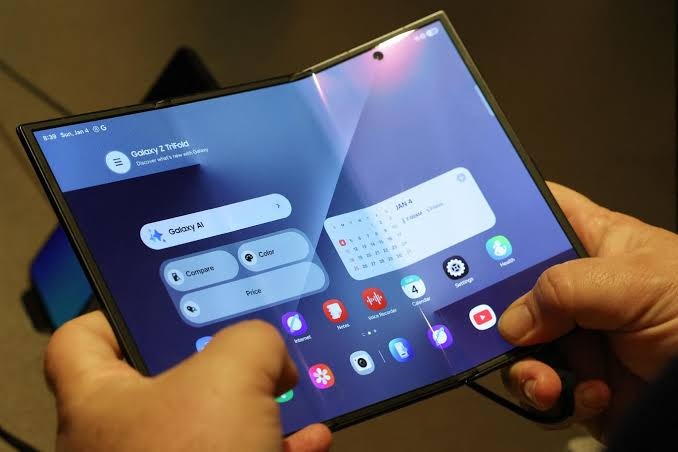
Every Galaxy Z Fold before this one opened into a tall, near-square display. The Z Fold 8 opens into something closer to a tablet in landscape mode.
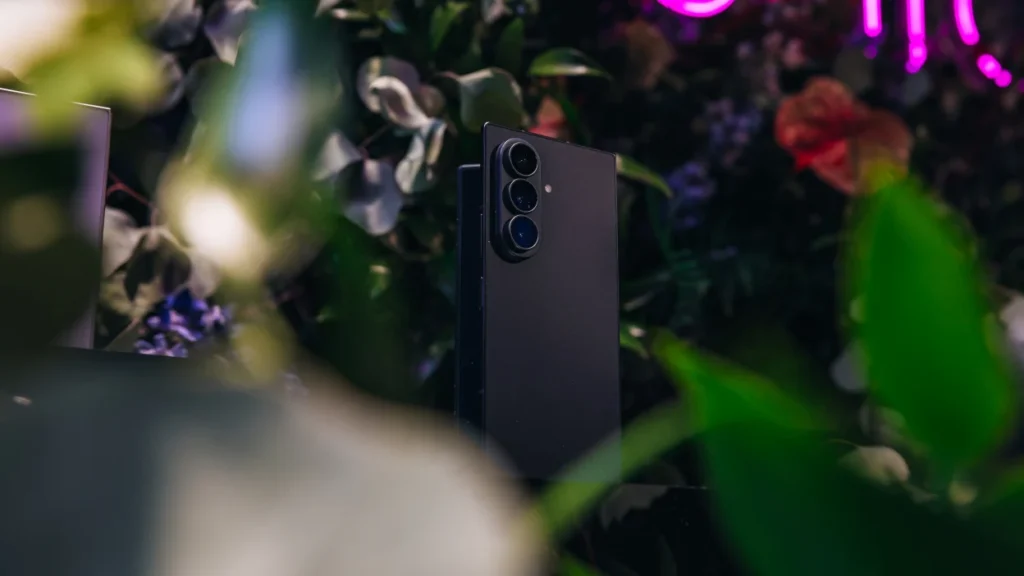
The inner display is a 7.6-inch QXGA+ LTPO AMOLED panel with a 4:3 aspect ratio, 120Hz refresh rate and peak brightness of 3,000 nits. The cover screen is 5.5 inches with FHD+ resolution and 120Hz refresh rate. When folded, the phone measures 123.9 x 81.9 x 9.7mm and weighs 201g.
The 4:3 ratio means the open display is wider and shorter than previous Fold screens. For reading documents, watching video, joining video calls or working on spreadsheets, this proportions feel far more natural than a near-square canvas.
The most common complaint about foldable phones for years has been the visible crease where the display folds. Samsung says it has addressed this with a new technology.
The Z Fold 8 introduces Samsung’s new Flex Titanium display technology, which replaces the polymer-film substrate used in previous Galaxy Fold models with a two-component structure featuring a titanium-alloy film. Prior Samsung foldables used a polymer-film substrate beneath the OLED panel that deformed at the fold line over time, creating the visible crease that has been the most common complaint about foldable displays since 2019.
The Z Fold 8 runs on the Snapdragon 8 Elite Gen 5 for Galaxy chip, with 12GB of base RAM and storage options of 256GB, 512GB and 1TB. It launches with Android 17 and One UI 9, and Samsung is offering up to seven years of software updates.

Galaxy AI features include Call Brief, My FanCam and enhanced Now Nudges. Samsung DeX, Secure Folder and Samsung Knox are all included as standard.
The rear camera system consists of a 50MP main sensor and a 50MP ultrawide lens. There is no telephoto camera on the Z Fold 8. The front cameras are two 10MP sensors, one on the cover screen and one under the inner display.
The absence of a telephoto lens is a notable trade-off, particularly for those upgrading from the Z Fold 7 or comparing with the Z Fold 8 Ultra, which carries a triple rear camera system. Samsung includes a Director’s View mode on the inner display for content creators and supports log video recording for professional colour grading.
The Z Fold 8 packs a 4,800mAh silicon-carbon battery with support for 45W wired charging, 20W wireless charging and Qi2 certification. Silicon-carbon battery technology generally allows for a higher energy density in a slimmer frame compared to traditional lithium-ion cells, though some early reports suggest there may be trade-offs with long-term capacity retention that are worth monitoring after launch.
The Z Fold 8 carries an IP48 rating, meaning it is protected against dust ingress and can withstand submersion in water up to 1.5 metres for 30 minutes. It comes in Graphite, Cream, Lavender and Pistachio colour options.
This is worth clarifying because the naming is counterintuitive. The Galaxy Z Fold 8 is the new wide-format model with the shorter, passport-style design. The Galaxy Z Fold 8 Ultra is the traditional tall foldable and is the direct successor to last year’s Galaxy Z Fold 7. The Ultra has a larger 5,000mAh battery, a triple rear camera system and a bigger 8.0-inch inner display, but it follows the older tall form factor. The two phones are aimed at different buyers.
At $1,899 before trade-in, the Galaxy Z Fold 8 converts to well over N2.8 million at current exchange rates, putting it firmly in premium territory. For Samsung loyalists already in the Galaxy ecosystem and looking for a device that works differently from a standard slab smartphone, the Fold 8’s new design is genuinely compelling. For everyone else, the price and the missing telephoto lens are real reasons to pause. It is a phone for people who want something different and are willing to pay for it.