

Nigeria’s Federal Government has set a target that sounds straightforward but carries enormous implications: reliable 24-hour electricity in at least 30 percent of the country’s health facilities by the end of 2027.

The target was reaffirmed at the third meeting of the Inter-Ministerial Steering Committee on the Nigeria Power for Health Initiative, jointly chaired by Dr Iziaq Adekunle Salako, Minister of State for Health and Social Welfare, and Joseph Tegbe, Minister of Power. President Bola Tinubu established the initiative in 2025 as a joint programme between the Federal Ministry of Health and Social Welfare and the Federal Ministry of Power.
The reason this story belongs in a conversation about technology is buried in plain sight. Modern healthcare no longer runs on doctors and medicine alone. It runs on connected systems.
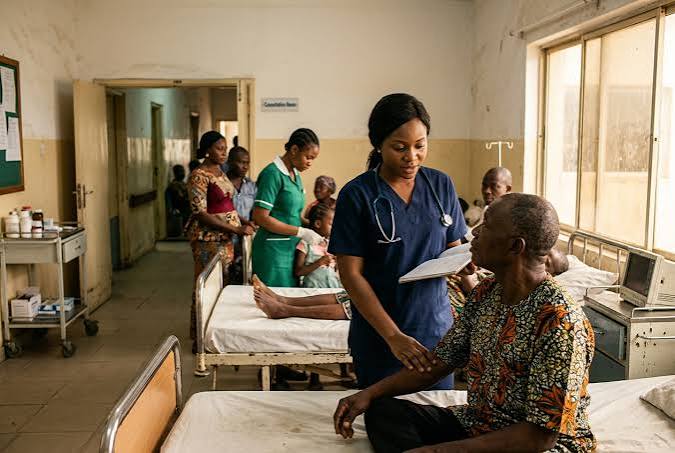
Electronic medical records, telemedicine platforms, connected diagnostic devices, digital payment systems, and other technology-enabled healthcare services all depend on continuous power and network availability. A hospital that loses power loses its ability to access patient records, process payments, run diagnostic equipment, or connect with remote specialists.
As Nigeria accelerates its adoption of digital health tools, the reliability of the underlying power infrastructure is increasingly what determines whether those tools actually work when a patient needs them. Power is no longer just a comfort issue for health facilities. It has become a prerequisite for digital transformation itself.
The Nigeria Power for Health Initiative is not simply a promise on paper. Several concrete steps were approved at the steering committee meeting.
The committee endorsed the establishment of a dedicated NPHI Programme Unit within the Federal Ministry of Health and Social Welfare to provide central coordination for the programme and drive implementation across the country. That recommendation will go before the 2026 National Council on Health for formal adoption.
The committee also approved continued engagement with eight identified energy solution providers as part of efforts to expand implementation capacity, and endorsed the prioritisation of cluster institutions as energy hubs. Rather than addressing health facilities one by one, the cluster approach would allow energy solutions to be deployed around groups of related facilities, improving efficiency and reducing duplication.

Salako confirmed that interventions by the Rural Electrification Agency have already delivered reliable electricity to approximately 100 hospitals nationwide, with development partners providing additional support at the primary healthcare level. He described this as the foundation on which the wider programme will build.
Most Nigerian public health facilities currently depend heavily on diesel-powered generators to manage the gap left by an unreliable national grid. This creates a compounding problem. Fuel and maintenance costs drain health budgets that are already stretched. The noise, pollution, and unreliability of generators make them a poor long-term solution. And for energy-intensive medical equipment, including refrigeration for vaccines, ventilators, and imaging systems, generator power is simply not adequate.
The NPHI is designed to move facilities away from this generator dependency toward more sustainable energy solutions, which could include combinations of grid connectivity, distributed generation, and energy storage systems designed to maintain critical services even when the main grid goes down.
The 30 percent target gives the programme a clear and measurable deadline: end of 2027, roughly 18 months from now. Reaching it will require sustained financing, effective procurement, reliable maintenance systems, and strong institutional coordination across the health and power ministries.
The proposed NPHI Programme Unit is critical to this. Without a dedicated coordination structure, programmes like this tend to lose momentum as competing priorities pull ministerial attention in different directions.
Daju Kachollom, Permanent Secretary of the Federal Ministry of Health and Social Welfare, said the initiative reflects the ministry’s commitment under the Nigeria Health Sector Renewal Investment Initiative to building more resilient health systems, and stressed the importance of sustained collaboration, institutional coordination, and timely implementation.
For Nigeria’s digital health ambitions to mean anything in practice, a patient in a government hospital needs to be able to have their records accessed, their diagnosis run, and their payment processed without the facility losing power mid-consultation. That requires reliable electricity, not a prayer that the generator holds.
The 30 percent target is a start. Getting there on time is the test.