

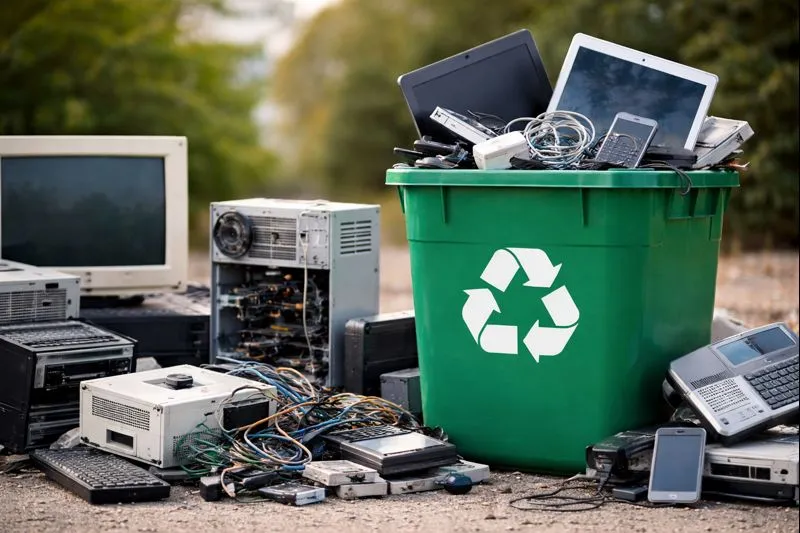
Nigeria is drowning in electronic waste, and the solution might already be pushing a cart through your street. That is the argument being made by Emmanuel Okoegwale, founder of Gocycle.ng, a Nigerian e-waste marketplace startup, who says the country does not have an e-waste supply problem. It has a logistics problem.

Okoegwale argued that Africa’s e-waste crisis cannot be solved by importing foreign recycling systems. The answer, he says, is upgrading what already exists on the ground.
Nigeria alone generates more than 100,000 metric tonnes of electronic waste every year. Old phones, dead batteries, broken laptops, discarded televisions, and worn-out home appliances pile up in homes, workshops, and dumpsites across the country.
Yet collection efficiency remains critically low. Most of that waste never reaches a certified recycler. Instead it ends up in informal dumpsites, landfills, or in the hands of scrap dealers who extract valuable materials using crude methods that release toxic chemicals into the air, soil, and groundwater.
Meanwhile, global e-waste systems are evolving fast, moving away from manual, hazardous dismantling toward standardised, high-yield recovery operations driven by data. Africa, Okoegwale argues, is still playing catch-up, and the gap is getting wider.
Okoegwale’s central argument revolves around a figure most Nigerians know intimately but rarely think about in the context of environmental solutions: the Babanbola.
The Babanbola is the informal collector who pushes a cart through urban neighbourhoods, navigating mechanic hubs, commercial areas, and residential streets in search of scrap to buy. These workers currently form the backbone of Nigeria’s e-waste collection system, not corporate recycling plants, not government programmes, but individual people operating entirely on instinct and local knowledge.
The problem, Okoegwale says, is that these collectors work in the dark. They rely on chance to find materials, they have no way of knowing the true market value of what they are collecting, and they often end up trading at predatory prices because the asset owners they buy from also have no idea what their discarded electronics are actually worth.
Okoegwale’s proposed solution draws directly from the ride-hailing model. Just as Uber and Bolt use software to connect rider demand with available drivers, a digital platform could bridge the fragmented e-waste value chain by connecting end-of-life asset owners, verified collectors, certified recyclers, smelters, and manufacturers in one place.

He described the vision directly: by treating e-waste collection as a micro-gig economy, a decentralised network of verified and formalised Babanbolas could accept scheduled, on-demand pickups from households and businesses. Real-time price intelligence would tell collectors the exact value of the scrap they are collecting before they even reach the pickup point.
The benefits compound quickly. Collectors earn more because they know what things are worth. They waste less time because pickups are scheduled rather than random. Collection efficiency and density improve. And e-waste that has been sitting unused in homes and workshops for years, quietly leaking toxins, finally moves through a proper channel.
Okoegwale’s argument is not just economic. It is environmental. When Babanbolas operate entirely in the shadow economy, they use crude extraction and processing methods, burning cables to recover copper, breaking apart batteries without protection, handling toxic materials with no safety equipment, because that is the only way they know how to extract value.
By financially incentivising these collectors to bring e-waste directly to certified, verified recyclers rather than processing it informally, the entire value chain becomes cleaner. Certified recyclers have the equipment and training to extract materials safely. Informal collectors get better income. The environment gets less toxic contamination.
Digital product verification adds another layer to this. When every battery collected is digitally recorded on a platform, it creates traceability for vendor take-back schemes and helps Nigerian operators meet international compliance and sustainability standards that global partners increasingly demand.
It is worth being clear that Okoegwale is not a neutral observer here. His company, Gocycle.ng, is an e-waste marketplace that would directly benefit from the kind of digital platform model he is advocating for. The argument he is making is also a pitch for the kind of business he is building.
That does not make the idea wrong. The logistics problem he identifies is real, and the informal collector model he describes as a solution already has precedents working elsewhere in the gig economy. But readers should weigh his perspective knowing where it comes from.
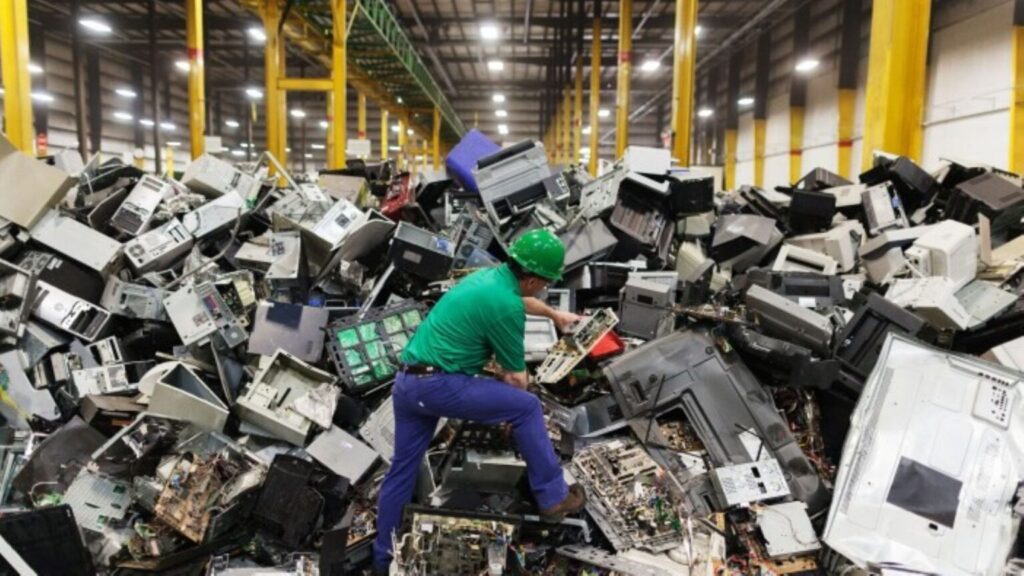
Okoegwale’s conclusion is direct. The future of African sustainability cannot be built by pushing the informal sector aside. It must be built by upgrading it. By shifting the Babanbola from an isolated scavenger to an agile, tech-enabled last-mile e-waste collector within a micro-gig economy, Nigeria has the potential to lead the continent in green tech innovation rather than lag behind it.
With 100,000 tonnes of e-waste generated every year and a vast informal collection network already in place, the raw ingredients for that transformation are already there. The question is whether the right digital infrastructure, regulatory support, and investment will arrive fast enough to make it happen before the waste problem grows even larger.