

Africa’s 5G story is still in its early chapters, but the numbers are moving fast. A new report from GSMA Intelligence shows the continent is on track to reach 380 million 5G connections by 2030, and Nigeria is positioning itself as one of the countries that will shape how that story unfolds.

The report, titled “5G in Africa 2026: Market Status, Trends and Outlook,” maps where Africa stands today, where it is heading, and what separates the countries making real progress from those still watching from the sidelines.
5G has become a genuinely global technology. More than 390 networks are now live across nearly 160 countries worldwide, and by the end of 2026, global 5G connections are expected to reach 3.4 billion, representing about 37 percent of all mobile connections on the planet.
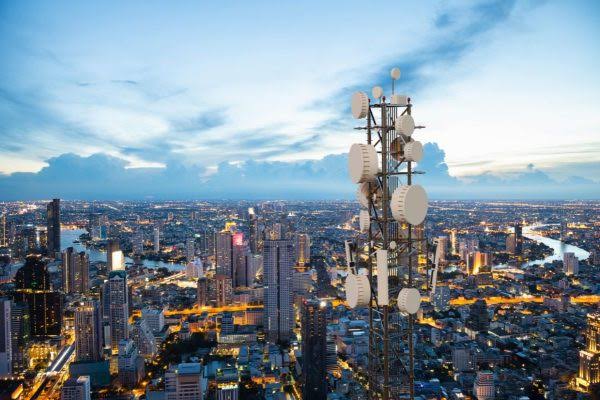
Africa is part of that story, but at a different pace. As of May 2026, 61 operators across 37 African markets had launched commercial 5G services, with 40 of those also offering Fixed Wireless Access, which delivers broadband to homes and businesses through a 5G signal rather than a fibre cable.
Adoption across the continent remains modest. Fewer than 100 million 5G connections are expected across Africa by the end of 2026, representing just 6.2 percent of the continent’s total mobile base. That figure is set to grow significantly, reaching more than 380 million connections, or just over 20 percent of Africa’s mobile base, by 2030.
Within Africa, Nigeria is making moves that most other markets are not. The country has already assigned spectrum in the 2600MHz, 3500MHz, and 3700MHz bands for 5G use. More significantly, Nigeria is preparing to license 26GHz millimetre wave spectrum between 2026 and 2028 for enterprise and highly localised use cases.
This makes Nigeria one of the very few African nations actively planning for high-band 5G. Most regulators across the continent are focused exclusively on mid-band frequencies, which offer a better balance of cost and coverage for consumer mobile services. Nigeria’s willingness to go further into high-band spectrum signals a more ambitious long-term vision.
The GSMA also noted that Nigeria is exploring low-band massive MIMO deployments, a technology that improves efficiency in dense urban environments like Lagos and Abuja by serving more users more reliably from the same antenna infrastructure.
Despite the bold spectrum strategy, the honest picture on the ground is more limited. By the end of 2026, Nigeria’s 5G connections are expected to account for just 15 percent of total mobile connections in the country.
To put that in context, Morocco leads the continent at 56 percent 5G penetration, while Mauritius sits at 35 percent. Nigeria’s 15 percent reflects the reality that 5G coverage in the country remains heavily concentrated in Lagos and Abuja, with rural areas still depending on 2G and 3G networks for basic connectivity.
This urban concentration is not unique to Nigeria. It is a pattern across most African 5G markets. But it does mean that for the majority of Nigerians, 5G remains something they have read about rather than something they have actually used.
What makes Nigeria’s 5G approach particularly interesting is where it is looking for value beyond consumer smartphones. The GSMA report specifically highlighted enterprise applications as a critical driver of 5G’s value proposition in Nigeria, with oil and gas, mining, and logistics identified as key sectors.

The planned rollout of 26GHz spectrum is expected to support private 5G networks and industrial automation, where ultra-low latency and very high speeds matter more than broad geographic coverage. A private 5G network on an oil platform or inside a logistics facility does not need to cover an entire city. It just needs to be extremely reliable and extremely fast within a defined area.
This industrial focus aligns with Nigeria’s broader digital economy ambitions and offers a path to 5G revenue that does not depend solely on convincing millions of consumers to upgrade their phones.
Across Africa, Fixed Wireless Access has emerged as one of the most practical near-term applications for 5G infrastructure. Rather than waiting for fibre cables to reach homes and businesses, operators can use 5G signals to deliver broadband through a router device installed at a property.
About 40 African networks now offer this service, and FWA connections are expected to grow from under one million today to 3.5 million by 2030 across the continent. Falling equipment costs have been crucial to this trend, with customer premises equipment prices dropping below $80 compared to over $200 just a few years ago.
South Africa currently leads in what the GSMA calls fixed-mobile convergence, where operators bundle mobile and home broadband services together. Nigeria is expected to follow as affordability improves and more operators develop competitive FWA offerings.
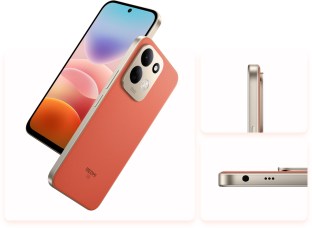
The GSMA was direct about the biggest barrier standing between Nigeria’s 5G ambitions and mass adoption: price. Entry-level 5G smartphones still cost more than $100, a figure that exceeds the monthly minimum wage for many Nigerians.
Without subsidies, financing schemes, or tax reductions on 5G-capable devices, mass consumer adoption will remain slow regardless of how much spectrum Nigeria assigns or how many towers operators build. The network can be ready. The phones just need to be within reach.
Operators are betting on FWA and enterprise solutions to generate 5G revenue while consumer device prices gradually decline. But the GSMA made clear that governments and operators must work together on policy incentives, infrastructure sharing, and spectrum refarming to unlock the technology’s full potential across the continent.
The GSMA’s conclusion about Africa’s 5G trajectory was pointed. The next four years will determine whether 5G becomes a true engine of digital transformation across the continent or remains a patchwork of isolated deployments concentrated in a handful of major cities.
For Nigeria specifically, the GSMA identified three things that will decide the outcome: how quickly operators can expand coverage beyond Lagos and Abuja, how effectively legacy spectrum is refarmed to support newer technologies, and whether enterprise use cases can generate the revenue needed to justify continued investment.
Nigeria has the spectrum strategy, the market size, and the enterprise opportunity to play a leading role in Africa’s 5G story. Whether it actually does will depend on solving problems that have nothing to do with technology, making 5G phones affordable, getting coverage outside the two biggest cities, and creating real industrial applications that justify the investment being made.