


Nigeria’s fintech conversation has officially shifted. The days of celebrating user acquisition numbers above everything else are over. What matters now is whether those users actually stay, trust the platform with their money, and keep coming back.

That was the central theme at the fifth edition of the Nigeria Fintech Forum, held on July 30, 2026, at the Civic Centre in Victoria Island, Lagos. Themed “Finance, Regulation, and the New Operating Reality,” the 2026 edition brought together regulators, bank executives, fintech founders, infrastructure providers, investors, policymakers, and technology leaders to examine the next phase of financial innovation in Nigeria.
More than 1,700 attendees from the fintech, banking, payments, retail, and e-commerce sectors gathered to hear from 30 expert speakers and engage with more than 40 exhibitors showcasing new products and solutions.
Nigeria’s fintech ecosystem is undergoing a major structural shift shaped by tighter regulation, increased compliance obligations, fintech acquisitions of microfinance banking licences, evolving digital asset oversight, and growing demand for resilient financial infrastructure.
Jamiu Ijaodola, CEO of Eventhive, the event organiser, described Nigeria’s fintech industry as entering a more mature and consequential phase where scale alone is no longer enough. The implication was clear: the next wave of winners in Nigeria’s fintech space will not be the companies that signed up the most users. They will be the companies those users actually trust with their money over the long term.
As Nigeria’s fintech industry matures, conversations are shifting away from rapid user acquisition towards a more sustainable question: how do fintech companies build products that customers continue to use long after signing up?
Tosin Akintibu, Product Manager at Nosh, a digital payments platform that attended as a Platinum Sponsor, made this argument directly in her keynote presentation on simplifying digital spending. She argued that while access to digital financial tools has expanded significantly, the next challenge for the industry is making those tools easier and more practical for everyday use, adding that the real gap in fintech is not getting people digital assets but making those assets usable in daily life.
Mosadoluwa Hezekiah, Nosh’s Marketing Manager, who joined a panel discussion on growth strategies, reinforced the same idea from a commercial angle. He said sustainable growth means designing for retention and lifetime value from day one, rather than building campaigns purely around converting first-time users, adding that in this market, trust compounds.

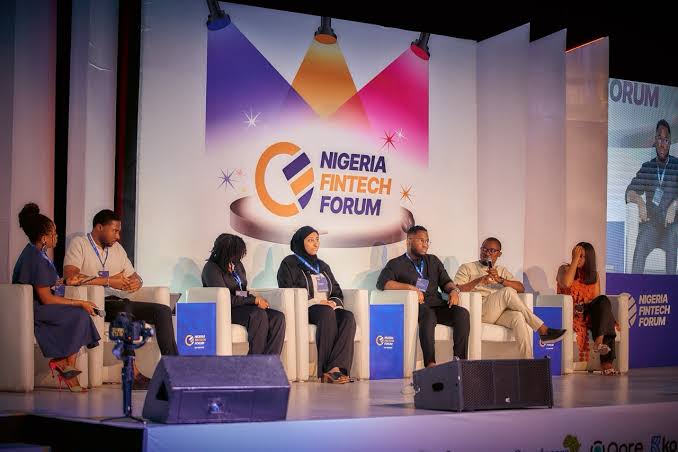
The trust conversation came up repeatedly across the day, from different angles and different speakers. For product teams, trust means removing the friction that makes users abandon a transaction midway. For marketing teams, it means communicating reliability rather than just features. For compliance teams, it means making regulatory alignment feel like a product benefit rather than a legal footnote.
Hezekiah put the compliance point plainly, saying customers do not want to hear the word compliance as a caveat but want to feel it as reliability, and that the companies talking about security, licensing, and regulatory alignment as part of what makes them trustworthy, rather than as fine print that slows things down, are the ones building lasting loyalty.
This framing connects directly to a wider concern that has emerged across the Nigerian fintech sector in 2026. Earlier this year, Microsoft’s Chief Security Advisor for Africa flagged that 84 percent of Nigerian adults encountered a scam in the past year, and that only four percent of victims report incidents to authorities. INTERPOL’s Africa Cyberthreat Assessment found that AI-generated fake identities are now being used to bypass biometric verification systems at Nigerian financial platforms. In that environment, a fintech that can genuinely demonstrate it is safer than the alternatives has a real product advantage, not just a marketing message.
The 2026 edition explored themes including the future of regulation and compliance, the convergence of fintech and banking, cross-border payments infrastructure, digital assets and cryptocurrency regulation, financial inclusion, fraud prevention, embedded finance, lending innovation, and the next generation of customer-centric financial products.
The forum examined how digital payments have become a larger part of everyday economic activity, how fintech companies are working more closely with traditional financial institutions, and how regulators are introducing new requirements around payments, fraud management, securities markets, and digital assets.
Cross-border payments drew significant attention given Nigeria’s position as both a major remittance-receiving economy and an increasingly important hub for pan-African fintech activity. Fraud prevention was treated not as a back-office function but as a core product concern, given the scale of digital fraud losses the CBN reported for 2024 and 2025.
The Nigeria Fintech Forum 2026 did not produce a single grand declaration about where the industry is heading. What it produced was something more useful: a shared acknowledgement that the metrics that mattered in the early growth phase are no longer sufficient.
Subscriber numbers, app download counts, and transaction volumes will continue to be reported. But the conversations in Lagos on July 30 made clear that the companies which will define Nigeria’s fintech sector over the next five years are the ones building products users trust enough to use for the transactions that actually matter. Getting a first download is no longer the hard part. Earning the right to handle someone’s money when it counts, that is where the real competition is now.