


Nigerian women are being harassed, impersonated and abused online, and when they try to fight back, it costs them money they often cannot afford. That is one of the central findings of a new nationwide study called Toxic Tech, published by digital rights organisation TechHer and supported by Luminate.

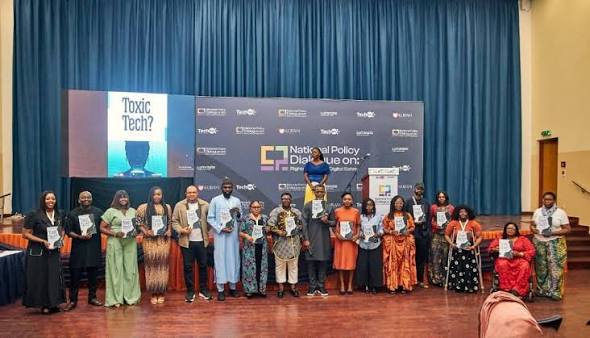
The findings were unveiled during the National Policy Dialogue on Rights, Justice and Digital Safety in Nigeria, held in Abuja. The study surveyed more than 370 respondents across Nigeria to document the prevalence, patterns and impact of technology-facilitated violence.
The report is one of the most detailed looks yet at what online abuse actually costs Nigerian women, not just emotionally, but financially, professionally and socially.
Survivors seeking justice frequently spend between ₦50,000 and ₦100,000, an amount many described as unaffordable, especially when compared with Nigeria’s minimum wage.
To put that in context, Nigeria’s current national minimum wage stands at ₦70,000 per month. That means some victims are spending more than a full month’s minimum wage just trying to get someone to listen to their complaint, with no guarantee of any outcome.
Beyond emotional trauma, survivors often suffer economic losses because fear of online attacks discourages them from conducting businesses or participating fully in digital spaces. In other words, the abuse does not stop when the screen goes off. It follows victims into their working lives and keeps them from earning.
The research exposed the disproportionate burden borne by women with disabilities and queer women in digital spaces. 90.5 per cent of queer women surveyed reported experiencing technology-facilitated gender-based violence, while many respondents from disability communities also faced persistent cyber harassment, impersonation, doxxing and online abuse.
Grace Jerry, Executive Director of the Inclusive Friends Association, said many victims with disabilities are not even aware that the discriminatory and ableist language being thrown at them online counts as abuse. That gap in awareness makes digital literacy an urgent priority for these communities.
“You cannot address issues around violence if you do not involve the communities that are most affected,” Jerry said.
Perhaps the most damning finding in the Toxic Tech report concerns the platforms where the abuse is happening.
More than half of victims who reported abuse to social media platforms received little or no response, exposing major accountability gaps among technology companies.

Tari Wills, Associate for Africa at Luminate, said technology has made existing social inequalities worse rather than better.
“As we see from the stories shared today, online harms have an effect on lives offline,” she said. “The people who were historically marginalised before the digital age now face even greater risks because technology platforms often amplify harmful narratives.”
She urged governments, civil society and technology companies to stop working in silos and come together around a clear principle: human rights must come before profit.
Head of Programmes at TechHer, Peter Akinusi, said the report represents the culmination of nearly five years of research into online violence and digital safety.
“We live in a world where almost everybody depends on digital technology. Everyone should be able to access the internet safely,” he said.
Akinusi said the report recommends stronger policy frameworks, better enforcement of existing regulations, improved platform accountability and digital systems built to include persons with disabilities from the ground up.
Representatives from the British High Commission and the UK National Crime Agency were also present at the dialogue. Matthew Mountain of the UK National Crime Agency said the level of technology-enabled gender-based violence presented at the event was higher than he had expected, suggesting that the problem remains significantly underreported despite what the survey already shows.
The dialogue concluded with renewed calls for stronger collaboration among government institutions, technology companies, civil society organisations and development partners to transform the findings of the Toxic Tech report into practical policy reforms that will make Nigeria’s digital space safer, more inclusive and more accountable.
Gbemisola Adebowale, Women’s Digital Rights and Safety Officer at TechHer, said the research was not designed to simply describe the problem. It was designed to move people toward action.
The Toxic Tech report makes one thing very clear: online violence in Nigeria is not a niche issue affecting a small number of people in unusual circumstances. It is a widespread, documented pattern that is costing women their money, their businesses, their mental health and their willingness to participate in public life. Until social media platforms are held accountable and justice becomes affordable, the burden will keep falling on the very people who can least afford to carry it.