
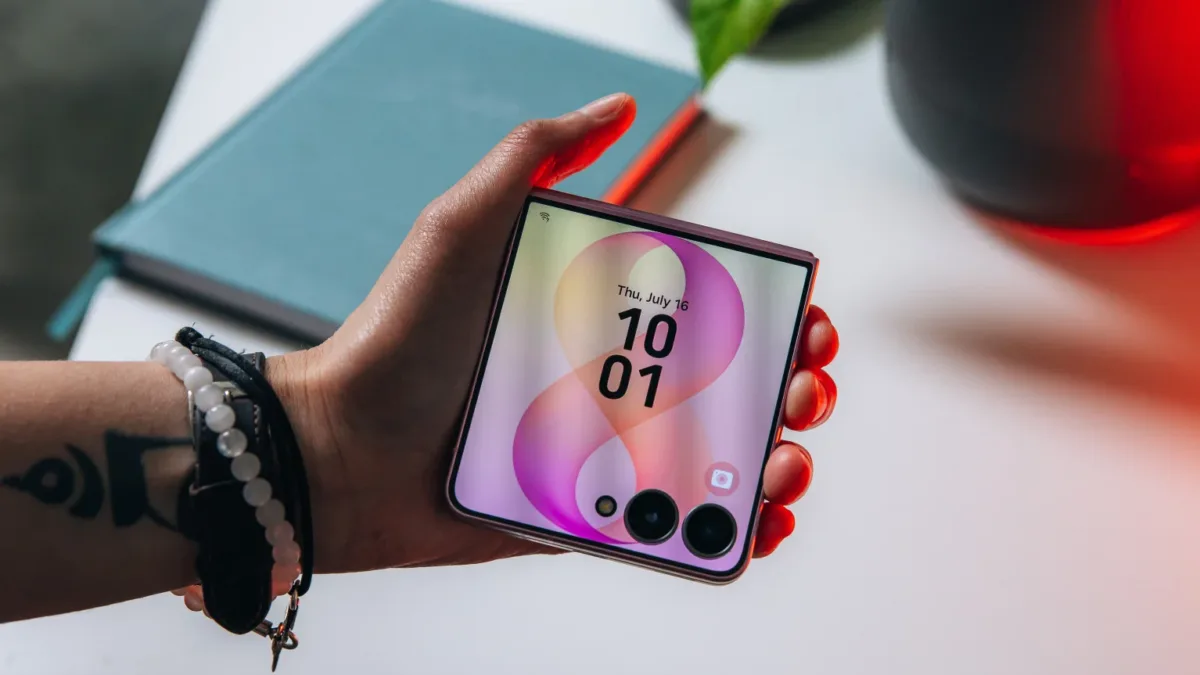
Samsung launched the Galaxy Z Flip 8 on July 22, 2026, at its Galaxy Unpacked event in London, and it went on sale on August 5, 2026. The phone is a genuine refinement of last year’s model, with meaningful improvements in display quality, weight, and software. But the signals surrounding this launch have sparked a conversation that goes beyond the specs: this could be the last Galaxy Z Flip Samsung ever makes.

The Samsung Galaxy Z Flip 8 starts at $1,199 for 256GB of storage, a $100 price hike over last year’s model, which also saw a $100 increase over the Galaxy Z Flip 6 before it. If you want the extra storage, Samsung is asking $1,399 for the 512GB model.
This is not a surprise given the RAM crisis, escalating storage prices, and the Galaxy S26 series price hikes earlier this year. The same memory cost explosion that pushed up MacBook, iPad, and Pixel 11 prices is now hitting Samsung’s foldable lineup too.
For Nigerian buyers importing through grey market channels, that starting dollar price gets amplified significantly once exchange rates, shipping, and import duties are applied.
The Galaxy Z Flip 8 measures around 13.1mm when folded and 6.1mm when unfolded, and weighs 180g, which is 8g lighter than the Galaxy Z Flip 7.
At 6.1mm thick, the Galaxy Z Flip 8 is roughly 13 percent thinner than the Z Flip 7. The most significant design upgrade is the display. The phone features a nearly crease-free foldable display using new dual LED ultra-thin glass and a redesigned hinge, which has been one of the most persistent criticisms of clamshell foldables since the category launched.
The phone comes in four colours: Cream, Graphite, Mint, and Pink.
On durability, there is a notable limitation. Samsung is sticking with an IP48 rating, which means the phone can be immersed in fresh water but is not dust resistant. That is a real shortcoming when more foldable phone makers are embracing IP58 or higher ratings.
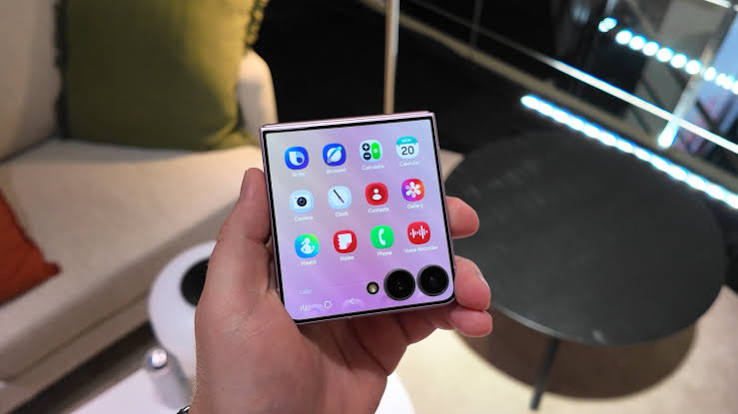
The Galaxy Z Flip 8 features a 4.1-inch OLED cover display and a 6.9-inch foldable OLED display inside.
The cover screen has received a meaningful software upgrade. One UI 9 on Android 17 transforms the cover screen into what Samsung calls an AI-native FlexWindow. Users can access the full apps tray and interact with Now Brief, a feature that surfaces calendar events, weather, and suggested actions based on their routine, without opening the phone.
Now Nudge spots plans in conversations and automatically prompts follow-ups. Gemini Intelligence, Google’s AI integration, works across 40-plus apps from the cover screen. This is the upgrade that makes the tiny outside display finally feel genuinely useful rather than just a notification mirror.

There is a regional chipset split: Exynos 2600 for Europe and Korea, versus Snapdragon 8 Elite Gen 5 for the US, Japan, South Africa, and the rest of the world.
For Nigerian buyers importing from the US, that means getting the Snapdragon variant, which most reviewers consider the stronger performer of the two. The phone runs Android 17 with One UI 9 and comes with up to seven major OS updates, which Samsung is now guaranteeing through 2033. That long-term software commitment remains one of the strongest arguments for choosing Samsung over most Android competitors.
Specific battery capacity figures from the confirmed spec sheet were not available across the sources reviewed, though the phone’s charging specifications are consistent with the broader Flip lineup. For confirmed battery details, Samsung’s official product page remains the most reliable source.
The software story is arguably the most compelling part of this upgrade. The AI-native FlexWindow cover screen experience, powered by One UI 9, makes Gemini Intelligence accessible across more than 40 apps without opening the phone. For a device category that has long been criticised for having a cover screen that does too little, this is a meaningful shift in how the Flip actually gets used day to day.
This is the question hanging over the entire Z Flip 8 launch. Samsung has not confirmed anything, but the signals are hard to ignore. The company cut its 2026 foldable production target to 5 to 6 million units. There is no Flip 8 FE, Samsung dropped the affordable variant. The strategic spotlight at Unpacked was clearly on the new wider Galaxy Z Fold 8 and Fold 8 Ultra, not the clamshell.
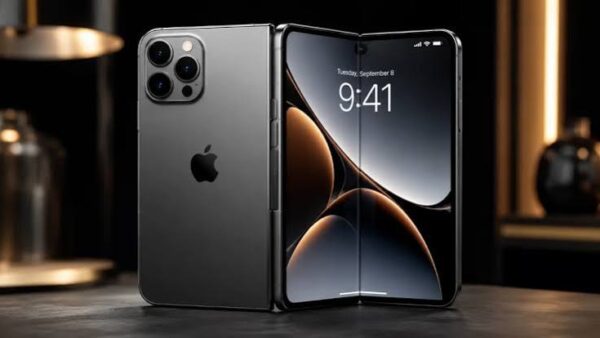
Motorola’s Razr lineup has quietly claimed over 50 percent of the US flip phone market, per IDC data. Chinese brands are undercutting Samsung on price in Asia. And Apple’s rumoured foldable iPhone, expected in September, is a book-style device, not a flip.
None of this confirms the Z Flip line is ending. But the combination of a shrinking production target, no affordable variant, and heavy marketing focus on the Fold series paints a picture of a product line that Samsung may be quietly winding down.
If you are upgrading from a Z Flip 5 or older, the improvements in crease reduction, weight, and software are substantial. If you bought the Z Flip 7 last year, there is little here that justifies $1,199 again.
While it is still cheaper than the Motorola Razr Ultra 2026’s premium price tag of $1,499, the bigger problem is how this new price point intrudes on traditional flagship territory. At $1,199, you are now in the same conversation as full flagship phones from Google, OnePlus, and others that offer more conventional but arguably more practical smartphone experiences.
Samsung’s seven-year update guarantee through 2033 dwarfs Motorola’s three years. If long-term value matters, the math tilts Samsung’s way.
The Galaxy Z Flip 8 is a good phone. Better display, lighter build, genuinely useful cover screen AI, and seven years of updates backed by Samsung’s ecosystem. But at $1,199 and rising, it is asking buyers to commit serious money to a product line whose future Samsung has not publicly committed to. For Nigerian buyers considering importing one, that uncertainty is worth factoring into the decision alongside the price.