
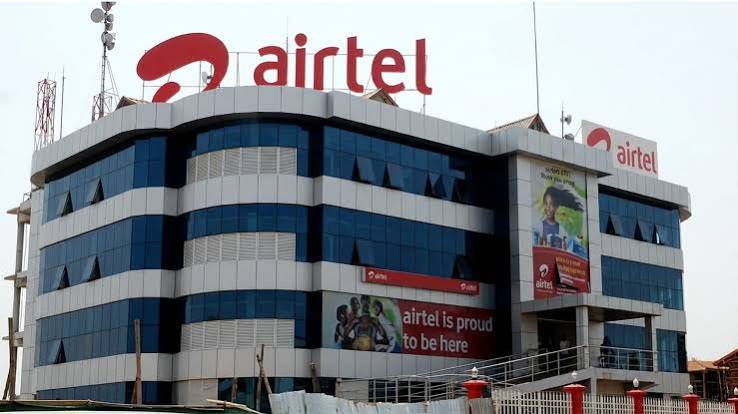
Airtel Africa and UNICEF are racing to connect 5,000 schools across Africa to free internet before the end of 2027, and Nigeria is on the list. The commitment was made by Airtel Africa CEO Sunil Taldar during a visit to St. Monica’s Girls School in Lusaka, Zambia, one of over 300 schools already connected under the programme in that country alone.

The School Connection programme is backed by a $57 million partnership between Airtel Africa Foundation and UNICEF, first launched in 2021. It is one of the largest private-sector commitments to digital education on the African continent.

The programme has already connected 3,296 schools, providing internet access to more than two million students and approximately 40,000 teachers. That means roughly 1,700 more schools still need to be connected before the 2027 deadline.
In addition, 64 digital learning platforms have been zero-rated, enabling over 11 million users to access educational content free of charge. Zero-rating means users can open these educational websites without spending any data, which matters enormously in countries where data costs remain high.
The School Connection programme is expanding digital learning to learners in 13 countries: Chad, Congo, Democratic Republic of Congo, Gabon, Kenya, Madagascar, Malawi, Niger, Nigeria, Rwanda, Tanzania, Uganda, and Zambia.
For Nigerian students in public schools, particularly those in underserved and rural areas where internet access is still unreliable or unaffordable, this programme offers a direct path to quality digital learning resources without any cost to the school or the student.

The initiative does not just drop a Wi-Fi router in a classroom and walk away. Airtel also trains teachers to use digital tools effectively, ensuring that the connection translates into actual learning.
Taldar said students are accessing education developed by UNICEF in partnership with various Ministries of Education and delivered through Airtel’s connectivity. He added that the aim is to keep deepening meaningful connectivity in schools through free internet access, zero-rated platforms and teacher training across the continent.
The headmistress of St. Monica’s Girls School, Sister Matilda Soloko, said the programme has made a real difference since the school was connected during the first phase. She said students have been able to study using the learning portal, and that their studies have been strengthened as a result.
UNICEF’s Country Representative for Zambia, Dr Saja Farooq Abdullah, said the partnership is addressing the inequality gap in education. He noted that students can now learn at their own pace, review materials and complete homework from home, not just during school hours.
Zambia’s Director of Secondary Education, Yvonne Mwemba Chuulu, added that the Ministry of Education cannot achieve digital learning goals alone and praised the collaboration between government, Airtel and UNICEF as a model worth following.
Africa has tens of thousands of schools with no internet access at all. Connecting 5,000 of them is not a complete solution, but it is a meaningful start. For Airtel, the programme also serves a long-term business interest: students who grow up using connected devices and digital learning tools are the subscribers, developers and entrepreneurs of tomorrow. When education wins, connectivity wins too.