

The Nigerian Communications Commission (NCC) wants businesses outside banking to be able to check whether a customer’s line is one of the recycled phone numbers or numbers flagged for fraud, its Executive Vice Chairman, Aminu Maida, said in Lagos on Tuesday, October 20, 2026. Speaking at the commission’s 95th Telecom Consumer Parliament, Maida said the NCC plans to extend its Telecommunications Identity Risk Management System (TIRMS) to more sectors that use phone numbers to identify customers and approve transactions, building on its work with the Central Bank of Nigeria (CBN).
Your SIM now carries far more than calls. One-time passwords for bank apps, pension accounts and online shopping all land on it, so a number that gets reassigned to a stranger after you stop using it can become a route into your accounts. Maida described the shift directly, saying “a phone number has also become part of our digital identity”. He didn’t give a date for the expansion or name the sectors that will join first.
| Event | 95th Telecom Consumer Parliament, Lagos |
|---|---|
| Recycled-number checks | TIRMS to be extended beyond financial services |
| Lines compensated in 2026 | About 75 million |
| Refunds for failed airtime and data | Nearly 3 million subscribers |
| Network interventions in 2026 | Over 6,500 |
| Data usage guideline | Coming, no date announced |
How a recycled line ends up opening someone else’s bank app
When a line stays unused long enough, the operator can take it back and eventually give the same number to a new customer. If your bank, pension administrator or shopping app still has that number on file, the new owner starts receiving your verification codes. TIRMS is meant to close that gap by letting organisations see that a number has changed hands, or has been linked to fraud, before they trust it with a login or a transfer.
Financial institutions already check numbers through the system under the NCC’s arrangement with the CBN, and the plan announced on Tuesday would open the same checks to other businesses that identify customers by phone number. Until that happens, the safest move is on your side. If you’ve switched to a new line, update the number on your bank account and any app that sends you codes, and don’t let a line that still receives your banking OTPs go dormant.
Airtime for 75 million lines, and Maida says that isn’t the point
Maida said about 75 million subscribers received airtime compensation for poor service in 2026 under the commission’s Consumer Compensation Framework, while nearly three million others got refunds for airtime and data purchases that failed. The NCC also recorded more than 6,500 network interventions this year. If you noticed a small credit land on your line without explanation, our breakdowns of why MTN lines got between ₦20 and ₦1,436 and how Airtel’s payouts for February to April worked explain where it came from.
He was clear that the payouts don’t make up for a bad network. “Compensation matters, but it cannot recover a lost business opportunity or an important conversation,” Maida said, pointing to service quality as the real target of the commission’s work under this year’s parliament theme, which focused on strengthening service quality and consumer protection in Nigeria’s digital economy.
A new rule should show you exactly where your data went
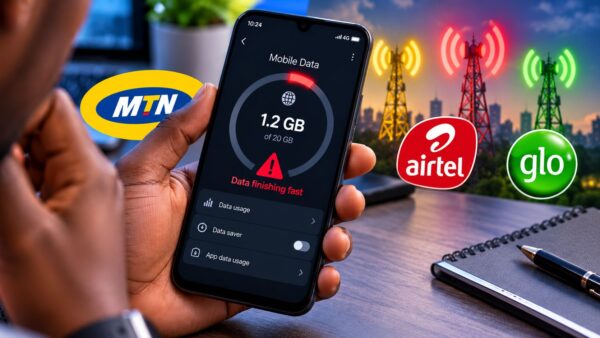
The announcement most data buyers will care about is a usage notification guideline that Maida said is on the way. It would require operators to give subscribers clearer information on daily data use, remaining balances and more detailed breakdowns of consumption. When you dispute a deduction, operators would have to investigate fairly and explain what they found, rather than simply restating your balance.
No release date was given, so nothing changes on your line yet. In the meantime, our guide to finding what’s eating your data on MTN, Airtel or Glo helps you build your own record, and if your network won’t resolve a billing complaint, you can take it further by escalating it to the NCC. Keep screenshots of your balance before and after any disputed deduction, because a clear timeline is what an operator will have to answer once the new guideline is in force.