
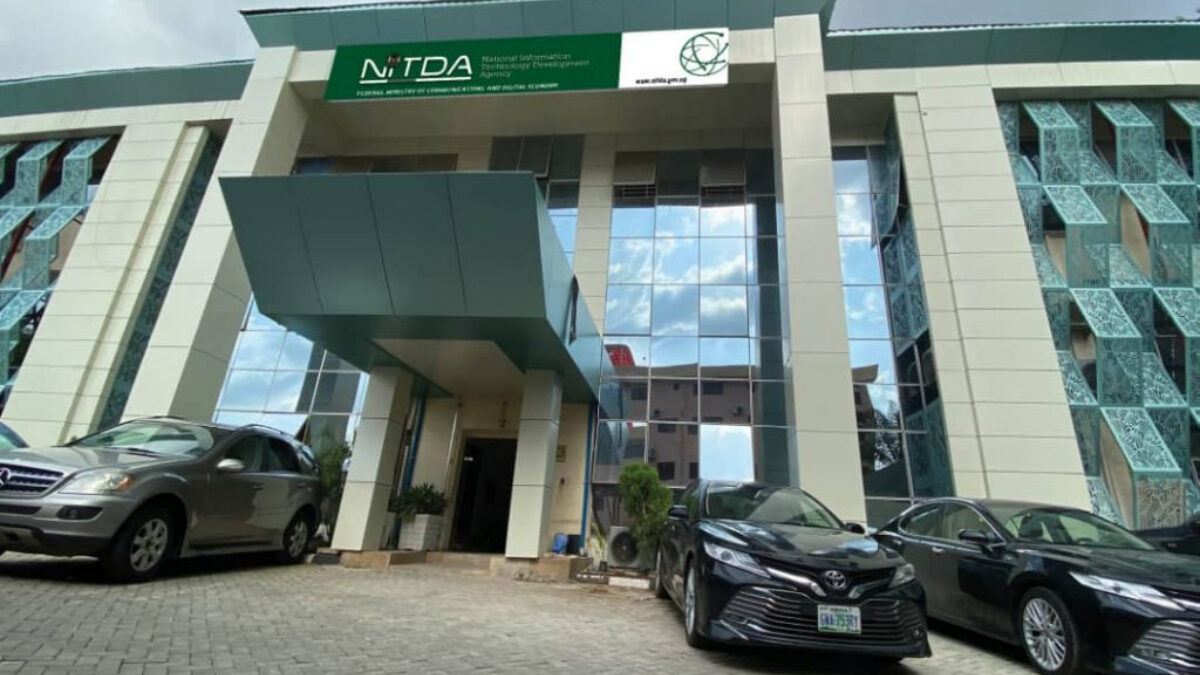
Only 40.6% of Nigerian adults personally use a smartphone, according to the Nigeria Tech Outlook Report 2026, which the National Information Technology Development Agency (NITDA) launched alongside an online Tech Outlook Dashboard at the Digital Nigeria International Conference and Exhibition (DNICE) in Abuja this week. The NITDA report also found that 86.5% of adults hold a financial account, yet just 6.6% bought anything online in the three months before the survey.
Those numbers cut against the picture of a country where everyone is on WhatsApp and paying by transfer. Most adults now have an account somewhere, but fewer than half carry the device that most digital services are built for, and that gap shapes everything from how banks design apps to whether government portals actually reach people.
Bank accounts are common, but digital credit and insurance aren’t
The financial services section is where the report’s contrasts are sharpest. While 86.5% of adults have an account, only 12% accessed digital credit in the past 12 months and 11.3% have any form of insurance. In practice, that means most Nigerians use their accounts to send and receive money, not to borrow through apps or protect themselves against loss.
Fraud is a real drag on that trust. The report says 13.1% of adults have personally experienced digital financial fraud, roughly one in eight. If you’ve ever sent money to the wrong account or been targeted by a fake alert, the CBN’s recent warning on what happens when someone keeps a wrong transfer is worth knowing, because the rules now cut both ways.
Online shopping and e-government still reach very few people
Just 6.6% of adults bought goods online in the previous three months, and 17.9% used a government service online in the past 12 months. Meanwhile, 77.5% of adults can carry out at least one of eight basic digital tasks the survey measured, which suggests the problem isn’t mainly that people don’t know how to use technology, but that devices, data and trust are still holding them back.
Health is the one area where demand is clearly ahead of supply. Some 75.9% of adults said they would use telemedicine if it were available to them, a figure that should interest every health startup and hospital chain that’s been unsure whether Nigerians would see a doctor over a phone call.
NITDA wants investors to look past connectivity alone
NITDA Director-General Kashifu Inuwa Abdullahi named payments, connectivity, digital devices, e-commerce, logistics, government technology and digital health as the main investment openings, while warning that money alone won’t close the gaps without better electricity, skills, consumer protection, trust and interoperability. He said “Nigeria must strengthen digital skills, trust, affordability and inclusion” if connectivity is to turn into economic and social gains.
The findings draw on 2,147 household interviews, 539 health facility interviews, 15 key informant interviews and administrative records from 10 institutions. Of the 105 indicators NITDA set out to measure, 97 had some supporting evidence and 8 still have data gaps. The dashboard lets anyone explore the figures and send feedback, which NITDA says receives a tracking reference, and announcements about it are expected on the NITDA website.
What a 40.6% smartphone figure means for the apps you use
For anyone building or choosing digital services, the low smartphone figure explains why USSD codes, agent banking and feature-phone options haven’t gone away. It also puts recent launches in context, such as Google Wallet’s arrival in Nigeria, which only helps people who already own a compatible smartphone, and MTN’s report that its average data user now consumes 15.3GB, a number driven by people who are already online.
Abdullahi said the report “should serve as a starting point for collective action”, and its value will depend on whether next year’s edition shows these numbers moving. The two to watch are smartphone use and fraud, because cheaper devices bring more people online and safer platforms decide whether they stay.