
Nigeria’s Central Bank Governor has issued a direct challenge to African leaders: no amount of AI ambition will translate into real economic gains if the continent cannot first solve its electricity and internet access problems.
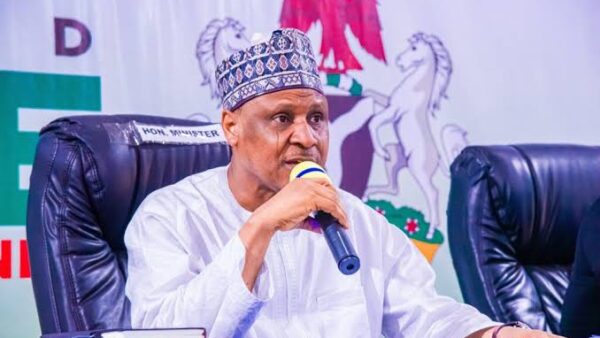
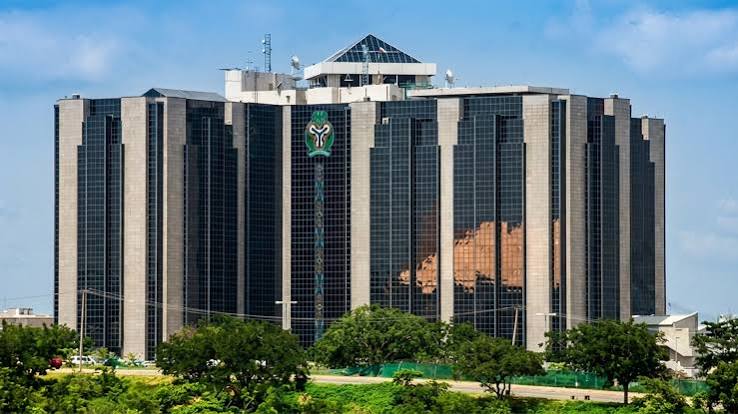
Olayemi Cardoso made the statement at the 7th African Emerging Markets Forum held at the Central Bank of Nigeria’s headquarters in Abuja on Wednesday, where he outlined what Africa must do to compete in the rapidly evolving global AI economy. The forum also featured Dr. Ngozi Okonjo-Iweala, Director-General of the World Trade Organisation, who added her own pointed message about what African countries need to fix to attract investment and create jobs.
Cardoso was unambiguous about the sequencing of Africa’s AI ambitions. He said the continent cannot fully participate in the AI economy without first addressing fundamental infrastructure gaps that continue to limit innovation, entrepreneurship, and digital inclusion across the continent.
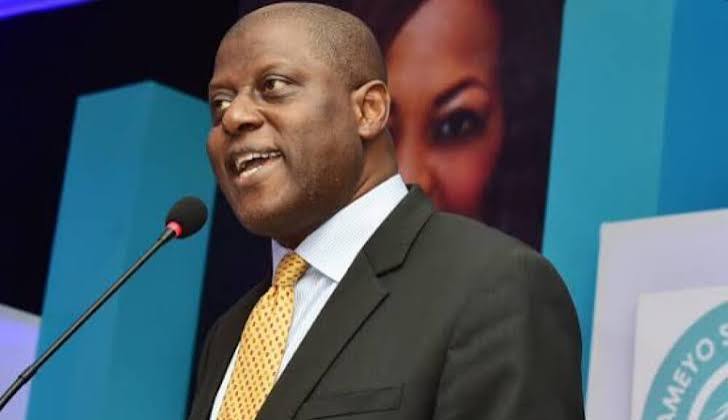
He said Africa must invest in the foundations of an AI-enabled economy, specifically naming reliable electricity, affordable connectivity, and digital infrastructure as the non-negotiable starting points. Without these foundations in place, AI tools, no matter how advanced, cannot function at the scale needed to drive real economic transformation.
This is not a new observation, but it carries extra weight coming from a central bank governor. The IMF made a similar point in its recent report on AI in Sub-Saharan Africa, which ranked Nigeria among the top five African economies with the most to gain from AI while flagging power and broadband gaps as the biggest barriers to capturing that potential.
Beyond infrastructure, Cardoso made a pointed argument about who needs to be part of Africa’s AI future. He urged African countries to actively unlock the economic participation of women, using a memorable phrase to drive the point home.
He said Africa cannot fly with one wing, arguing that excluding women from the digital economy cuts the continent’s productive capacity in half before the race has even started.
On young people, Cardoso said preparing Africa’s youth with AI-related knowledge and technical skills would enable them to create solutions tailored to African challenges while competing successfully in international markets. He added that African entrepreneurs should be able to build, scale, and compete without having to leave the continent to realise their potential elsewhere, a clear reference to the brain drain problem that has long stripped Nigeria and other African nations of their most talented graduates.
One of Cardoso’s strongest statements at the forum was about the direction of Africa’s relationship with technology. He argued that Africa’s ambition should extend beyond simply adopting foreign-built AI tools.
He said Africa must move beyond being consumers of technology and become creators, developing African solutions to African challenges and building businesses capable of taking those solutions to the world. This shift from consumer to creator is what he described as the real prize of the AI economy for Africa.
This framing aligns closely with what Nigeria’s tech sector has been arguing for years, that the country has the talent and market size to build globally competitive technology products rather than simply importing and adapting what others have built.
Cardoso also connected Nigeria’s ongoing macroeconomic reforms directly to the country’s digital ambitions. He explained that restoring orthodox central banking practices has played a key role in stabilising Nigeria’s banking sector, foreign exchange market, and wider economy, and that this stability is essential for the kind of long-term investment digital infrastructure requires.
He said many fiscal responsibilities previously assigned to the Central Bank had contributed to high interest rates and distortions in the foreign exchange market, and that unwinding these distortions is what makes it possible for businesses to plan and invest with more confidence.
Cardoso expressed confidence that interest rates would moderate over time, improving access to financing for small and medium-sized enterprises, and said the ongoing banking sector recapitalisation would strengthen banks’ ability to support productive sectors of the economy.
He acknowledged that policy implementation remains Nigeria’s biggest challenge, and said the country has consistently demonstrated the ability to formulate good policies but often struggles with execution. He added that the CBN is documenting its reform journey specifically to provide future policymakers with lessons that can help prevent a return to the approaches that undermined economic stability in the past.
WTO Director-General Ngozi Okonjo-Iweala reinforced Cardoso’s message with her own direct challenge to African governments. She urged Nigeria to continue its macroeconomic reforms while ensuring they translate into jobs and economic opportunities for young people, saying the real test of any reform is whether ordinary citizens actually feel it in their lives.
On attracting foreign investment, Okonjo-Iweala offered a clear-eyed assessment. She said attracting investment requires deliberate improvements in governance, infrastructure, and the business environment, and added that charity begins at home, saying countries cannot really attract foreign investment if their own domestic investors are not investing locally.
She also encouraged African countries to develop regional value chains around critical minerals by processing raw materials locally rather than exporting them in raw form, pointing to electric vehicle battery production as a specific opportunity where Africa’s mineral wealth could be turned into manufacturing advantage rather than just export revenue.
What makes Cardoso’s speech worth paying close attention to is not its novelty. Africa’s electricity and broadband gaps have been discussed at countless forums over many years. What has changed is the urgency. As AI reshapes the global economy at a pace that is faster than most people anticipated, the window for African countries to position themselves as participants rather than bystanders is narrowing.
For Nigeria specifically, the IMF has already identified the country as one of Africa’s top five AI-ready economies based on its workforce structure. But that potential advantage disappears quickly if the power stays unreliable, the broadband stays expensive, and the young people with AI skills keep leaving to build their careers abroad. Cardoso’s message from Abuja is that fixing those problems is not a background concern. It is the entire strategy.