

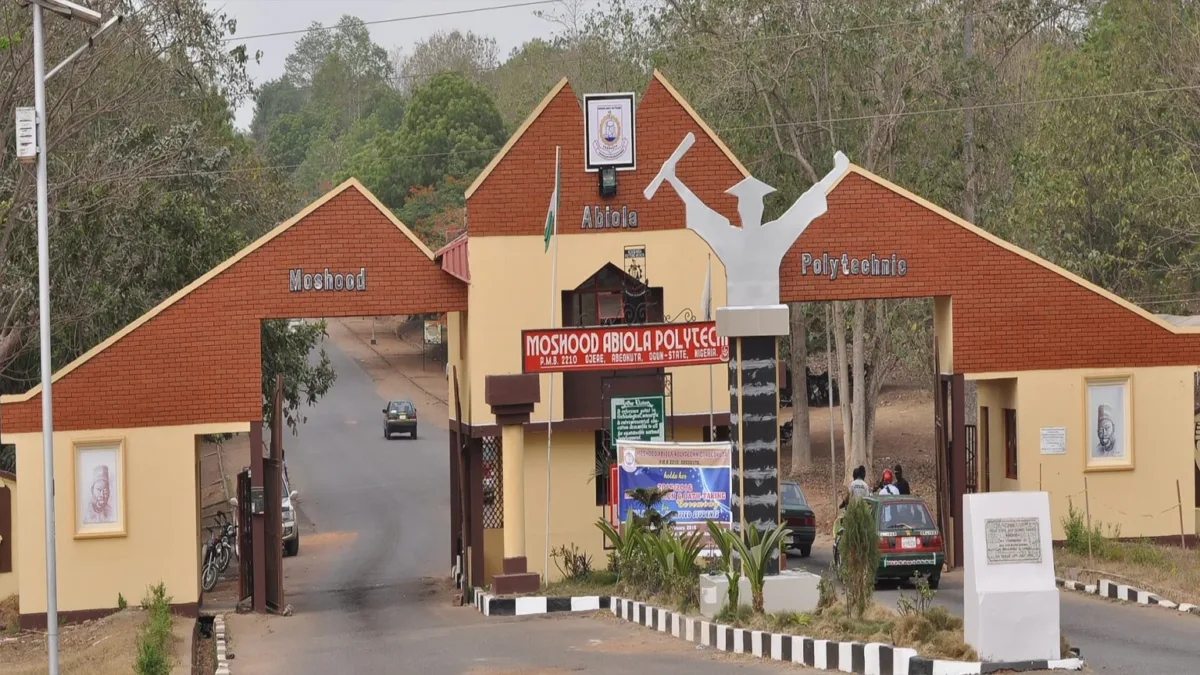
A Nigerian polytechnic has just unveiled a fibre internet infrastructure that could redefine what digital education looks like in the region. Moshood Abiola Polytechnic, known as MAPOLY, has launched a 10 Gigabits per second Smart Campus Fibre Infrastructure at its Abeokuta campus in Ogun State, positioning itself as one of the most digitally connected tertiary institutions in West Africa.

The unveiling ceremony drew royal, legislative, and academic voices who described the project as a turning point not just for the institution but for technical education in Nigeria more broadly.
To put the speed in context, most Nigerian university campuses operate on shared internet connections that deliver a fraction of a single gigabit to hundreds or thousands of users at the same time. A 10Gbps backbone gives MAPOLY a fundamentally different level of capacity, enough to support high-bandwidth research activities, real-time collaboration, cloud-based learning platforms, video conferencing, and AI-assisted tools across the entire campus simultaneously.

MAPOLY Rector Arch. Babatunde Jolaoso described it as a landmark achievement that would strengthen innovation, technological advancement, and technical education. He said the facility would enhance the institution’s global visibility and establish it as a reference point for technology and innovation, adding that its impact would extend beyond the institution to contribute meaningfully to national and global development.
The Olowu of Owu Kingdom, Oba Saka Adelola Matemilola, who chaired the unveiling ceremony, described the project as a strategic investment in technology-driven education, research, and innovation. He said the infrastructure would strengthen research capacity within the institution by providing the digital backbone required for world-class academic work.
The monarch acknowledged that inadequate digital infrastructure remains one of the biggest challenges confronting Nigerian tertiary institutions, limiting their ability to compete globally in research and innovation. He expressed confidence that the Smart Campus project would bridge that gap, but urged the institution and stakeholders to ensure proper maintenance and effective utilisation of the facility to maximise its benefits for students, researchers, and society.
One concern raised at the event was the risk of students misusing high-speed campus internet for cybercrime and other unlawful activities, a legitimate worry given Nigeria’s ongoing battle with internet-enabled fraud.

The rector addressed this directly. He said comprehensive monitoring and security mechanisms have been integrated into the system, and that all the facilities are built to check the activities of negative users. He reaffirmed the institution’s commitment to responsible technology adoption and said the infrastructure would provide a secure environment for innovation.
Senator Shuaib Afolabi Salisu, representing Ogun Central Senatorial District, described the Smart Campus launch as a significant milestone in Nigeria’s drive toward technology-enabled education. He also disclosed that he had independently sponsored the training of more than 2,000 young people in artificial intelligence, cybersecurity, and digital content creation, with laptops provided to support entrepreneurship and job creation.
He urged students to maximise the opportunities the new infrastructure provides, noting that while its full impact might not be immediate, it would deliver long-term benefits for future generations and national development.
MAPOLY is not a flagship federal university. It is a state-owned polytechnic that has operated for decades in a sector often overlooked when it comes to digital infrastructure investment. The fact that a polytechnic in Abeokuta is now operating a 10Gbps smart campus network sends a meaningful signal about what is possible when institutions outside the traditional elite university circle prioritise digital infrastructure.
If the facility is properly maintained and genuinely accessible to students for research and learning rather than administrative use alone, MAPOLY could become a practical model for how other Nigerian polytechnics and colleges of education approach campus digitisation.
The honest note to end on is that no cost figure was disclosed at the event, no implementation timeline for full student access was shared, and no independent technical assessment of the infrastructure has been made public. The 10Gbps figure describes the network’s capacity, not the speed any individual student will experience on a shared connection.
What MAPOLY has done is make a significant and genuinely unusual investment in campus digital infrastructure. Whether students actually feel that difference in their daily learning experience will depend on how the system is managed, maintained, and opened up for real academic use in the months ahead.