

OpenAI launched ChatGPT Wallet on Friday, November 13, 2026, giving its dots agents a way to complete purchases for you with a saved credit card. The rollout is limited to ChatGPT Pro subscribers who live in the United States, and the cards it accepts must be issued in the US, so a card from a Nigerian bank can’t be added to it today.
That puts the Wallet in the “watch, don’t set up” column for readers here. How it works still matters, though, because OpenAI has built it so the agent never sees your real card number, and that design answers the biggest worry anyone has about letting AI spend their money.
Your real card number never reaches the agent
According to OpenAI’s help page for the feature, the Wallet stores your card details and lets you review and approve each transaction before it happens. Once you approve, it generates a payment token, which OpenAI describes as “a substitute for your actual card details”, with its own card number, security code and expiry date. Your card gets charged, but the business and the agent never handle the real numbers.
Before anything is paid for, the dot shows you the merchant, the items, the total and the card it plans to use. Nothing goes through until you confirm with a biometric check such as Face ID or a fingerprint scan, so a dot can’t quietly run up a bill while you’re away from your phone. OpenAI built the system with American Express, Mastercard and Visa, and cardholders keep the rewards and protections that already come with their cards.
Who can switch it on right now
The list of conditions in OpenAI’s announcement and its help centre is short but strict. To use the Wallet you need all of these:
- A ChatGPT Pro subscription and a dot already set up, since the Wallet only works inside conversations with a dot
- An age of 18 or older and a home in the United States
- An eligible US-issued American Express, Chase, Mastercard or Visa credit card with a US billing address
Debit cards aren’t supported at all. OpenAI also says the rollout is gradual, which means some Pro subscribers in the US who meet every condition still won’t see the option yet.
Why a Nigerian card won’t get you in, even with Pro
Location is only half of the barrier. The card itself has to be issued in the US with a US billing address, and naira or dollar cards from Nigerian banks are issued here, so they fall outside the rule even for someone paying for Pro. Changing your location with a VPN wouldn’t change where your card was issued, and a debit card is ruled out whichever country it comes from.
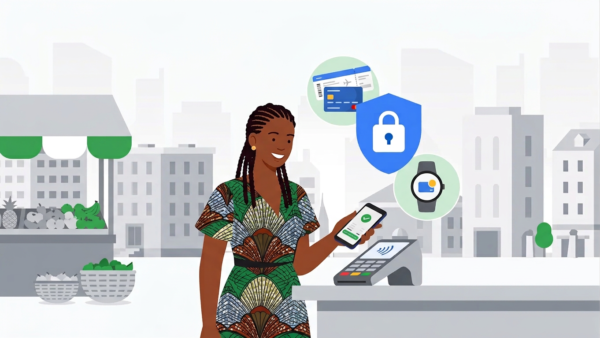
OpenAI hasn’t announced a date for other countries, or for Plus and free accounts. It has been bringing other changes to Nigerian users on a wider timetable, such as the ads coming to free ChatGPT plans in Nigeria, so the Wallet’s US-only start doesn’t tell us much about when it might arrive here. If paying with your phone is what you’re after today, Google Wallet is already live in Nigeria, even though not every local card works with it yet.
Until OpenAI opens the Wallet to cards issued outside the US, any website, Telegram seller or “agent” offering to unlock it on a Nigerian account is selling something OpenAI doesn’t offer here, and the card details you’d hand over are exactly what the Wallet was built to protect.