

Meta said on Monday, November 9, 2026, that it is expanding its Instagram AI age detection worldwide, so accounts it suspects belong to teenagers will be moved into Teen Account protections “even if they use an adult birthday to set up an account”. The company expects “millions more teens across the world who use Instagram” to land in those protections, and it is continuing the same rollout on Facebook.
Meta’s announcement names no country exceptions, which means a Nigerian teenager who typed in an older birth year to get past Instagram’s sign-up screen can now have the account switched to teen settings. Parents, young-looking adults and anyone who runs a business page from a personal account all have a reason to pay attention.
What changes the moment Instagram decides an account belongs to a teen
In its newsroom post, Meta describes Teen Accounts as limiting three things, namely who can contact the teen, the content they see, and how much time they spend on the apps. Meta says those Teen Account limits apply across Instagram, Facebook and Messenger, although the new detection itself is so far confirmed for Instagram and Facebook.
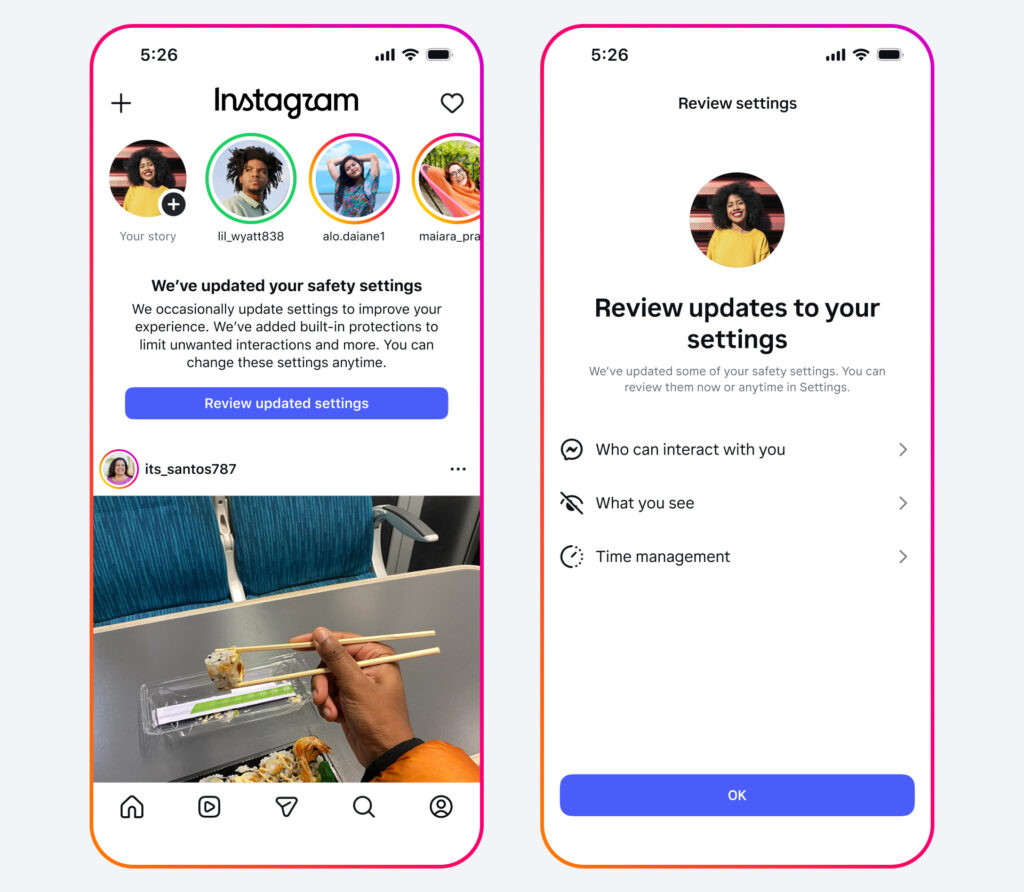
Meta didn’t list in the post exactly which signals its AI weighs before it moves an account, and it didn’t explain how an adult who is wrongly flagged can prove their age and get out of teen mode. That second gap matters for young-looking adults, including university students and small business owners who sell on Instagram, because an account that limits who can contact it is a poor fit for a shop that relies on messages from new customers.
An American settlement is driving a change Nigerian users will feel
The expansion follows Meta’s agreement with 52 attorneys general from US states, territories and the District of Columbia, which commits the company to stronger detection of accounts that may belong to children under 13 and to teens aged 13 to 17. Meta is applying that detection worldwide rather than only in the United States, and it says a similar system is coming to Threads later this year.
Meta also used the announcement to press TikTok and YouTube to adopt the same practices, and it said it supports laws that would make app stores verify age and collect parental consent once, then pass that signal to every app. In Australia, Meta already uses Apple’s age-range signal, which an app store can assign when a parent sets up a child’s phone, as an extra check. No such arrangement has been announced for Nigeria.
Other platforms have been drawing similar lines for younger users in Nigeria. When OpenAI confirmed ads were coming to ChatGPT in Nigeria, teen accounts were kept out of them, while Meta’s recent enforcement in the region has included a fraud crackdown in which it deleted 3.7 million scam accounts linked to West African networks.
Parents get the most out of this if they set the age correctly first
Meta says parents can help by making sure their teen’s age on the account is accurate, and it has published a guide written by Larry Magid of the online safety group ConnectSafely on its Family Center, which is open to parents worldwide. In the United States, parents will also see an explainer video in their Instagram feed this month, but Meta hasn’t said when or whether that prompt reaches other countries.
If your child already uses Instagram with a made-up adult birthday, sit down together and correct it before the AI does it for you, so the limits arrive as a conversation rather than a surprise. Adults who find their own account moved into teen settings should check Instagram’s Help Centre for how to update their age, because Meta’s announcement doesn’t spell out the appeal steps for this rollout.