
Underwriters Laboratories once bought 400 counterfeit phone adapters from eight countries and put them through a standard electric strength test. Three passed. Twelve were built so badly that engineers classified them as capable of killing the person holding the phone. That’s not a story about bad value, it’s a story about a product category where the cheap version and the real version look identical and behave completely differently the moment something goes wrong.
Nigeria buys more of these than almost anywhere. Original Transsion and Samsung chargers cost real money, roadside vendors sell replacements for a fraction of it, and a phone charges perfectly well on either right up until it doesn’t. Add unstable mains, generator changeovers and the habit of charging overnight under a pillow, and the risk profile here is worse than in the markets where most of the safety research was done.
The part that keeps mains voltage away from your hand
A charger’s job is converting roughly 220 volts of mains AC down to about 5 volts of DC, and the safety of that conversion rests almost entirely on one thing, which is the isolation between the high-voltage side and the low-voltage side. Genuine chargers use properly separated transformer windings and insulated wire specifically so the two circuits can never meet, even if a component fails.
When UL examined why its counterfeit samples failed so comprehensively, that was the answer. The isolation wire wasn’t there and the windings weren’t properly separated. Without that barrier, a fault inside the charger can put mains voltage onto the USB port, which means onto your cable, your phone and you. The London Fire Brigade found genuine Apple chargers contained upwards of 60 components while the counterfeits it examined averaged fewer than half that. The missing components are the protection.
Electrical Safety First reached similar conclusions in the UK, finding that 98 percent of the counterfeit and lookalike chargers it tested could deliver a lethal shock or start a fire. A more recent round of testing found metal weights glued inside a majority of the units it opened, added purely so the charger would feel substantial in the hand, and those weights compromised the electrical separation further while creating a short circuit risk of their own.
Cheap and counterfeit are not the same problem
This distinction matters, because the advice to only buy original chargers isn’t realistic when an original Transsion brick costs several times what the market alternative does. A charger from a legitimate budget brand that carries real certification marks is a different product from one pretending to be something it isn’t, and the second category is where the danger concentrates.
Which? tested 15 third-party chargers in June 2026 and found nine posed serious electric shock risks with eight also presenting fire or explosion hazards, and several of those came from mainstream retailers rather than back-street stalls. One counterfeit had modelling clay inside it and started arcing within ten seconds of being powered. So the rule isn’t that only expensive chargers are safe, it’s that a charger sold at a price no honest manufacturer could achieve is telling you something about how it was built.
What to look at before you hand over the money
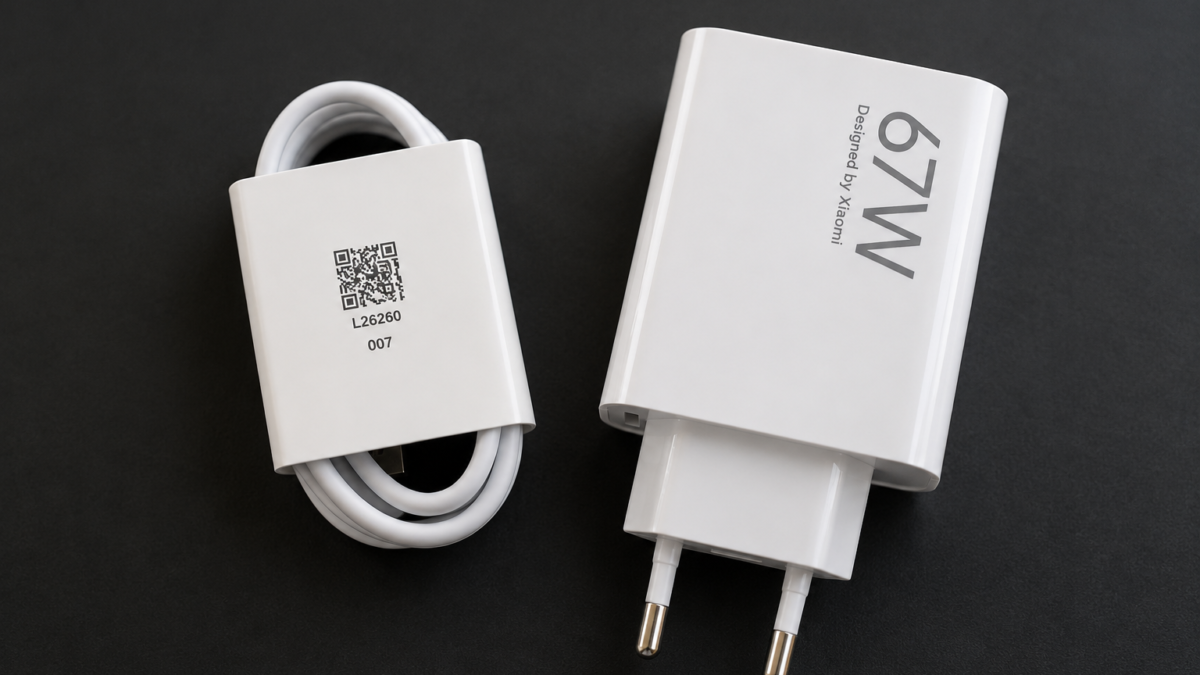
Weight is the fastest check and it’s the one counterfeiters try hardest to defeat. A genuine charger feels dense because it’s full of components, and a fake feels light unless someone has weighted it artificially. If a charger feels suspiciously heavy for its size and rattles slightly, that’s not reassurance, it’s the clay trick.
- Read the printed text closely, since blurred characters, uneven spacing and spelling errors are the most reliable giveaways.
- Check for certification marks and whether they’re properly proportioned rather than crudely copied.
- Look at the pins, which should be uniformly finished and fit the socket firmly without needing force.
- Inspect the moulding for gaps or rough seams where the casing halves meet.
- Treat an implausibly low price as the strongest signal of all.
Once it’s in use, a charger that becomes too hot to hold comfortably, smells of warm plastic, buzzes, or has ever scorched around the pins should be thrown away rather than kept as a spare. Substandard units also degrade over time as heat damages their already-thin insulation, so one that seemed fine a year ago isn’t necessarily fine now. The same buy-carefully logic runs through our guide to the checks worth running before buying a refurbished flagship in Nigeria.
Nigerian power adds risks the research doesn’t cover
Most of the testing above happened on stable European and North American grids. Here the supply behaves differently, and the moment worth worrying about isn’t low voltage, it’s the spike when mains returns after an outage or when a generator changeover kicks in. Decent chargers include surge protection sized for those events. Counterfeits generally don’t, which is why so many die during a NEPA restoration while the phone survives.
Charging through an extension board with built-in surge protection costs little and absorbs most of that. If you’re on generator or inverter power regularly, unplugging chargers during changeover is a small habit worth building, and it’s worth knowing that many cheap extension boards marked as surge protected contain nothing of the sort.
Heat is the other local factor. Charging in a hot room, under a pillow, or inside a thick case while gaming raises the battery temperature well beyond what it was designed for, and sustained heat does more measurable damage to capacity than any charger brand. Doctors publishing in the Annals of Emergency Medicine have also specifically advised against sleeping with a phone charging in the bed, because burns from generic chargers turn up in emergency rooms often enough to warrant the warning. If your phone runs hot generally, the settings covered in our piece on the hidden battery settings most Infinix owners never find are worth going through.
Will a bad charger actually damage the phone itself
Less directly than most people assume, and it’s worth being accurate rather than alarming. The circuit that controls how much current reaches your battery lives inside the phone, not the charger, so a modern Tecno or Infinix will regulate a mediocre charger’s output rather than blindly accepting it. What you’ll typically notice is slow charging, because the charger can’t negotiate the higher-power modes your phone supports.
The genuine hardware risk arrives when the charger fails rather than when it works, and that failure can send voltage the phone was never built to handle straight into the charging port. That’s how a ₦1,000 saving turns into a dead motherboard, and it’s a category of damage repairers see constantly. If your phone has started behaving oddly since you changed chargers, our walkthrough of what actually speeds up an older Android phone covers the software explanations worth ruling out first.
Buy from a shop you can go back to, keep the charger that came in the box as your reference for what a real one feels like, and accept that a legitimate budget brand with proper markings beats a convincing fake at any price. Spending a bit more once is cheaper than the phone, and considerably cheaper than the outcomes UL’s engineers were describing, and the wider question of where phone money is well spent is something we covered in the buying mistakes that waste Nigerians’ money.