
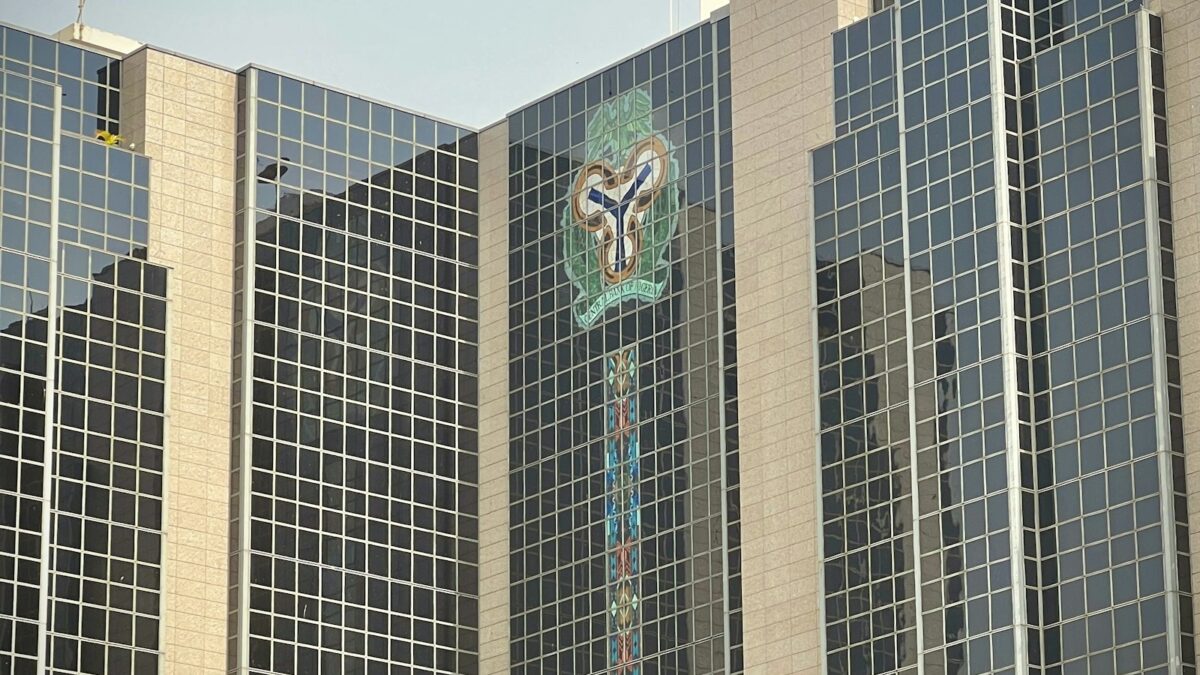
The Central Bank of Nigeria (CBN) is holding to January 1, 2027 as the start date for payment data localisation, meaning critical payment transaction data handled by banks, fintechs and other payment firms is to be kept within Nigeria. CBN Deputy Governor Lamido Abubakar Yuguda restated the date at an Executive Regulatory Dialogue organised by NITDA with the apex bank, according to a statement NITDA published on November 12, 2026.
That leaves the payments industry about five weeks. Every transfer you make from a bank app, every POS payment and every wallet top-up passes through systems run by these companies, so where that data sits, and whether those systems keep running smoothly through the switch, affects anyone who pays for things digitally in Nigeria.
Why the CBN wants your transaction data on Nigerian soil
The requirement comes from a CBN circular on market structure, data localisation, beneficial ownership disclosure and systemic oversight in the Nigeria payments system. At the dialogue, Yuguda framed the goal around safety, saying “Our collective objective should be clear: to build a digital financial ecosystem that is innovative without compromising security”.
NITDA Director General Kashifu Inuwa gave a more practical reason, tying the plan to the undersea internet cables that connect Nigeria to the rest of the world. He said the aim is that “Submarine cable disruption cannot automatically affect our payment system”. Put simply, if the systems that process your payments are in Nigeria, a cable fault far away shouldn’t be able to stop you from paying for fuel or sending money to family.
NITDA wants banks and fintechs to go first on its sovereign cloud
The CBN deadline is tied to a wider NITDA project called the National Sovereign Cloud Initiative. NITDA describes it as part of a digital sovereignty and data localisation push, backed by an assurance framework built on international certification standards, national certification options and what it calls Nigeria’s national sovereign architecture requirements. Inuwa said the financial sector should be “the first sector to comply”, and he was careful to say the plan isn’t about cutting Nigeria off from global technology, telling the audience that “Digital sovereignty is not about politics. It is not about isolation.”
NITDA’s statement says global cloud providers and sector regulators are part of the conversation, but it doesn’t spell out how each provider will be treated. Exactly which systems can stay offshore and which must move is the detail banks, fintechs and their customers will be watching most closely.
Local data centres say they’re mostly ready, with three big worries
NITDA surveyed local infrastructure firms to see whether they can take on the extra demand, and Dr Muhammad Aminu Lawal, Special Assistant to the NITDA DG on Policy, presented the results at the dialogue.
- 79% of the 42 digital infrastructure and service providers surveyed reported readiness.
- 74% said they could onboard new financial customers within three months.
- The main constraints named were financing costs, power supply and foreign exchange.
A three-month onboarding window against a deadline that’s now about five weeks away is tight for any bank or fintech that hasn’t started moving. It also means one in five of the providers surveyed didn’t report being ready, so the firms that are ready could see a rush of new financial customers before January. For a wider picture of where Nigeria’s digital economy stands, NITDA’s 2026 tech outlook report is a useful companion read.
What this means for your bank and fintech apps
Neither the CBN nor NITDA has asked customers to do anything, and the work happens on the providers’ side. If your bank or wallet app sends a maintenance notice in the coming weeks, read it rather than dismissing it, and plan important transfers outside any announced downtime. The rule sits alongside the CBN’s other recent moves on digital money, including its new stablecoin and virtual asset rules for crypto apps serving Nigerians.
If the move goes to plan, the payoff for ordinary users is a payment system that keeps working when an international cable goes down. January 1 will show whether local data centres, power supply and financing are strong enough to carry Nigeria’s payment traffic.