
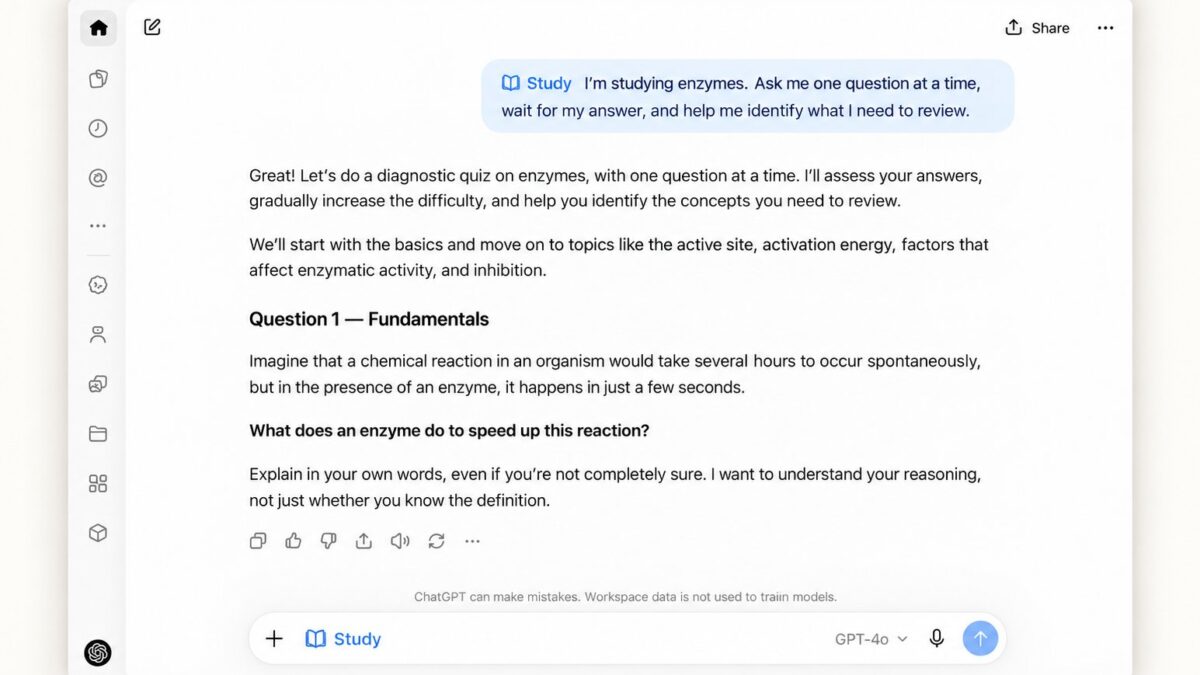
ChatGPT has a Study Mode that refuses to simply hand you the answer, and OpenAI put it back in the spotlight on October 15, 2026, when its Teachers’ Day post described it as a tool that walks students through a subject one step at a time with questions, hints and checks on what they’ve understood. It’s included on the free ChatGPT plan, so any Nigerian student with a ChatGPT account can switch it on today without paying for Plus.
That makes it worth a look for anyone preparing for the 2027 UTME, which the Federal Government has proposed to hold in March, or for SS3 students starting their WASSCE revision. The difference from normal ChatGPT is that you do the thinking and the AI checks your work, which is closer to how a good lesson teacher drills you than to copying a solution.
| Launch Price | Included on the free plan, and on Plus, Pro and Team |
|---|---|
| Where to find it | Tools menu in a ChatGPT chat, then Study |
| How it teaches | Questions, hints, step-by-step explanations and quizzes |
| Can you switch it off mid-chat | Yes |
| Works inside Projects | No |
| Release Date | July 29, 2025 |
Turning on Study Mode takes two taps in a new chat
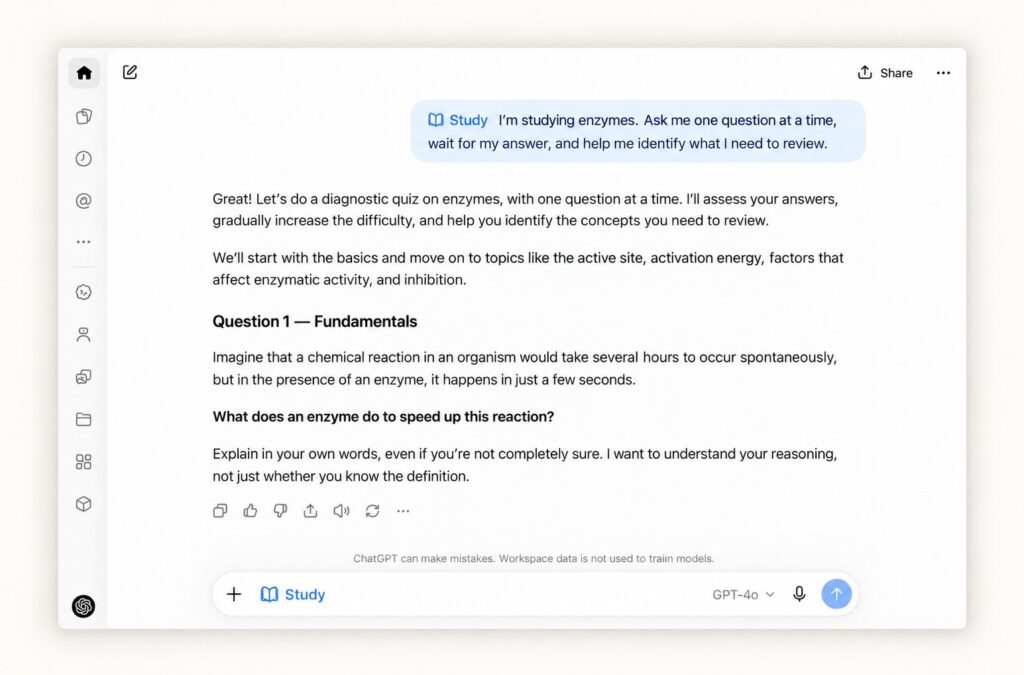
Sign in to ChatGPT on the app or at chatgpt.com, start a new chat, open the tools menu beside the message box and pick Study. When OpenAI launched the feature in July 2025 the option was labelled Study and learn, so you may still see that name if your app hasn’t updated. Once it’s on, type the topic you want to revise and tell it which exam you’re preparing for.
Don’t start it inside a Project. OpenAI’s help page on Projects says Study Mode doesn’t apply to project conversations, so a revision chat you’ve filed under a “JAMB prep” project will behave like ordinary ChatGPT. Keep your study sessions in regular chats and name them by subject so you can find them again.
Tell it exactly how you want to be drilled
OpenAI’s own advice is to give Study Mode specific instructions, such as asking for one question at a time and asking it to point out what you should go back and review. That works well for exam subjects. A Biology candidate could type “Quiz me on enzymes for UTME, one objective question at a time, and explain my mistakes after each answer.” A Chemistry student could ask it to set five mole-concept calculations and only reveal the working after you’ve sent your own.
For essay and theory papers, paste the question and ask Study Mode to guide you to an outline with hints rather than writing the answer. Use English, Literature or Government past questions you already have, and ask it to mark your attempt against the points an examiner would look for. If a quiz moves too fast, say so; OpenAI says the mode adjusts to your level and can draw on memory from your earlier chats.
| Problem | Likely cause | Fix |
|---|---|---|
| It gives the full answer straight away | Study Mode wasn't selected for that chat, or the chat is inside a Project | Start a new chat outside Projects and pick Study from the tools menu again |
| The questions are too easy or too hard | It hasn't been told your level or exam | Say which exam you're writing and ask it to raise or lower the difficulty |
| An explanation contradicts your textbook | OpenAI admits the mode can make mistakes across conversations | Check the point in your recommended text or with your teacher before you memorise it |
| You want a quick answer for once | Study Mode keeps asking questions | Switch it off in the same chat from the tools menu |
Where Study Mode still falls short
OpenAI is open about the limits. It says Study Mode runs on custom instructions on top of its normal models, which can lead to “some inconsistent behavior and mistakes across conversations”, and it plans to build the behaviour into the models themselves later. In practice, treat every explanation as a second opinion. Your syllabus, your recommended textbooks and past questions from the exam body remain the authority on what will actually be tested.
It also costs data like any chat app, and long sessions with images of handwritten working add up on a small bundle. If your plan keeps running out, our guide to finding what’s eating your data on MTN, Airtel or Glo shows how to track it. Paid users should also know that ChatGPT subscriptions bought from Nigeria carry VAT, which we explained when OpenAI started charging 7.5% VAT here, though you don’t need a paid plan for Study Mode.
How to fit it into a UTME or WAEC revision week
Study Mode is most useful after you’ve read a topic yourself, as a way to find the gaps before the exam finds them for you. Read the chapter, close the book, then ask for ten questions on it and note every one you miss. Revisit those weak areas the next day in a fresh chat, and keep the timed practice for the real CBT format separate, because a patient tutor that waits for you is no substitute for answering against the clock.